✧ PORT/FOLYO v2 — ŞİMDİ GİF VE VİDEOLU ✧ SCROLL YAP VE KEŞFET ✧ EN İYİ INTERNET EXPLORER'DA GÖRÜNÜR ✧ PORT/FOLYO v2 — ŞİMDİ GİF VE VİDEOLU ✧
💿WOW!!!!NEWEL YAPIMI HTMLGUESTBOOK'A YAZ
● portfolyo.exe — çalışıyor...
PORTFOLYO
Duru Beste Sakav2.0port_folyo.exe — 27.4 MB — 2026
ZİYARETÇİ: 003417yeni! gifler + videolar eklendi
SPECTACULAR
✦✧✦
🎬merhaba!
Kısaca ben.
iconic since 2004
minnie me 🐭
2026 grad 🎓
otoportre
2026 Ege reklamcılık mezunuyum. Küçüklükten beri bir şeyler üretmeyi ve yaratmayı seviyorum, ama hâlâ
ne olacağımı merak eden biriyim. Hayatın anlamını hiç çözemedim, sadece bunu kimseye
belli etmeden anlatabilen insanlara hayranım. En büyük hayalim Philomena Cunk gibi
röportajlar yapmak. David Lynch severim, Eraserhead'i 20 defa
izledim ve resmen fedaisiyim. İzmirliyim, boyoz severim; bu benim için bir kimlik
meselesi. Bu sayfayı Claude ile vibe code yaptım. Data centerları pek sevmediğim hâlde
Anthropic'in felsefesi galiba bana uyuyor. Sonuçta iyi anlatılmış bir yalan, kötü
anlatılmış bir gerçekten bana göre her zaman daha inandırıcıdır.
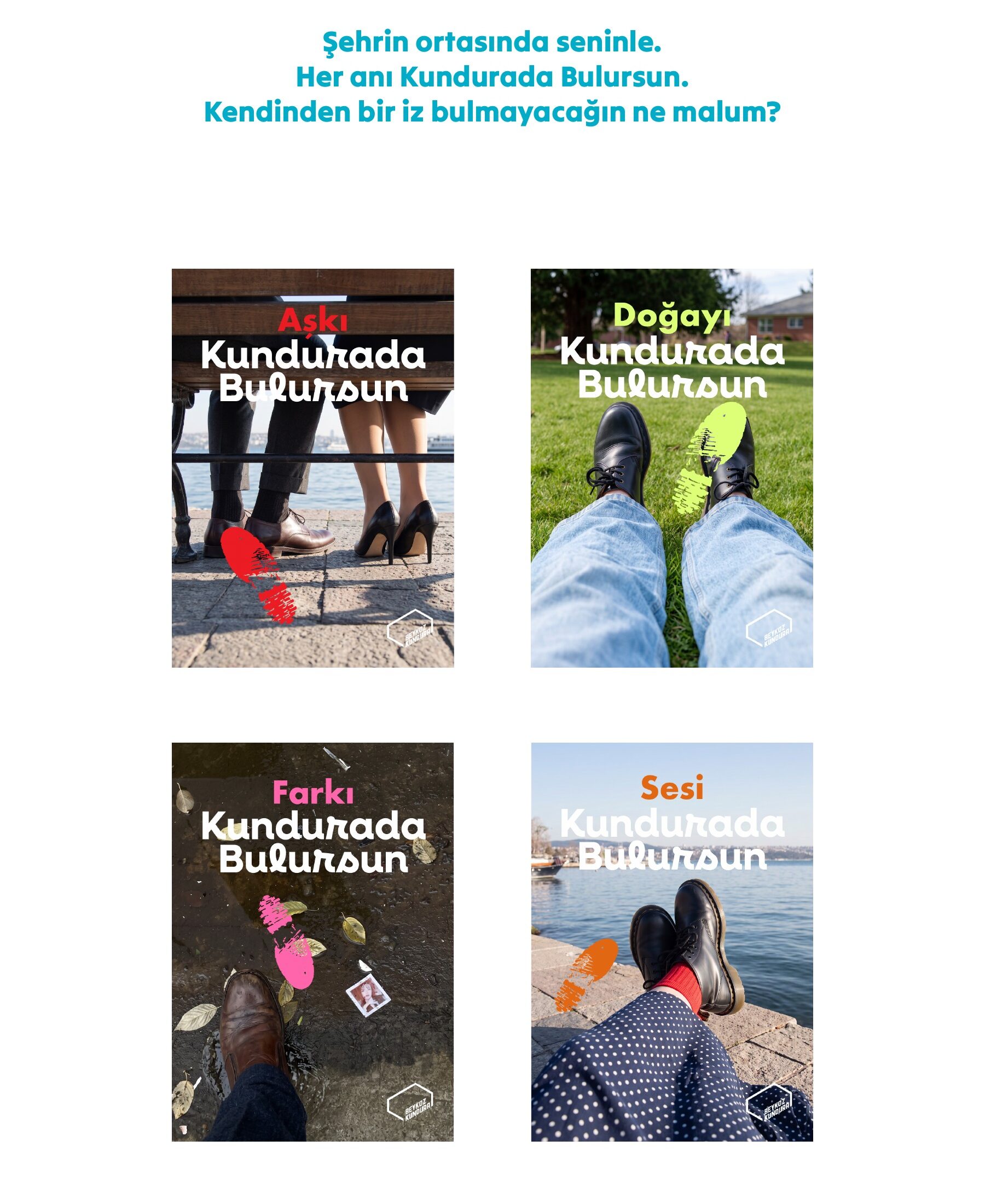
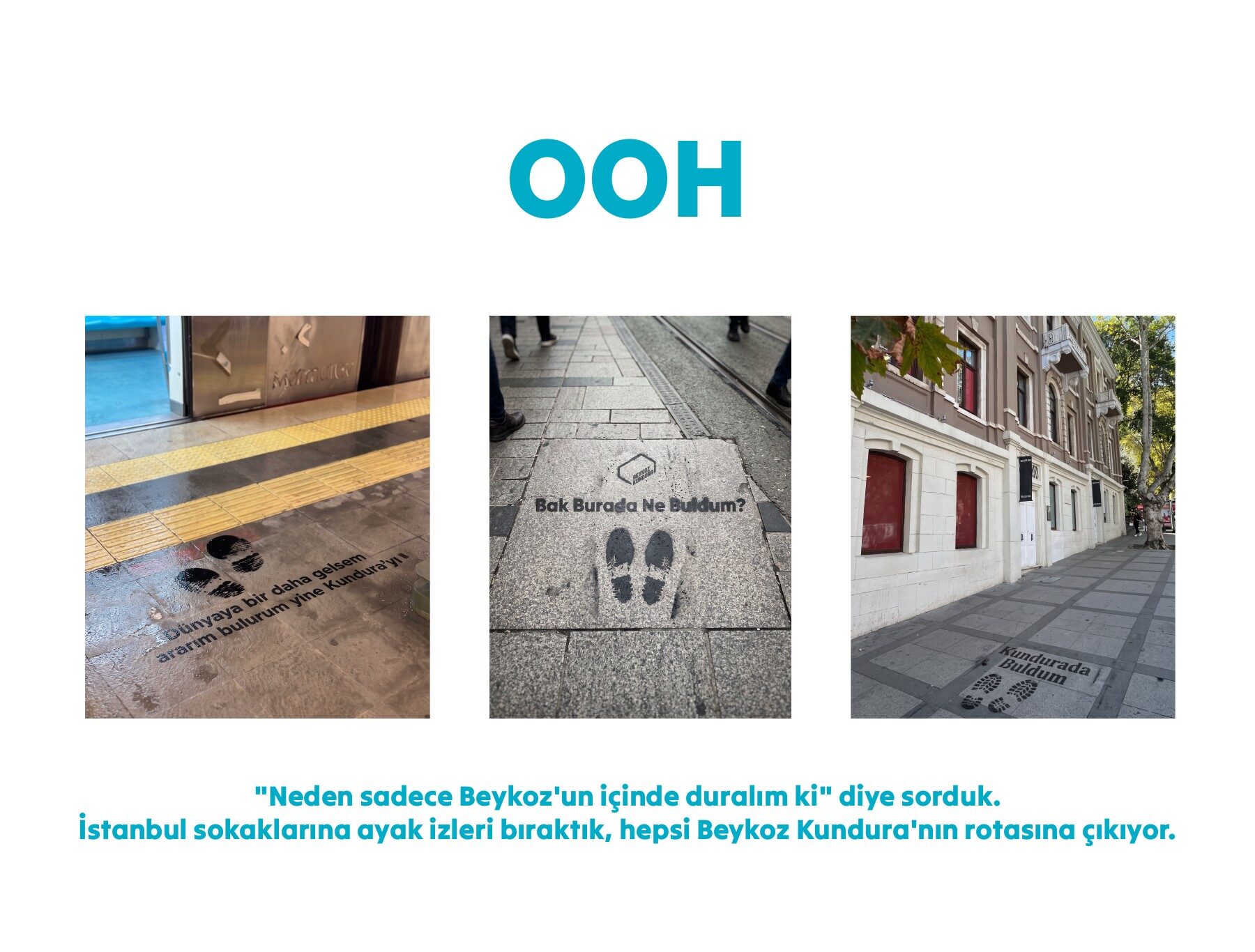
Çaylak Kampı 2026'da Kundurada Bulursun kampanyası — Arayan zaten bulur.
BRİEF: Beykoz Kundura
ROLÜM: Copywriter
EKİP: 4 kişi
İÇGÖRÜ: "İstanbul'da tüm etkinlikler ve deneyimler birbirine benzemeye başladı."
Beykoz Kundura'nın elinde güçlü bir miras var ama bugünün diliyle konuşmuyor. Biz de ayak izini
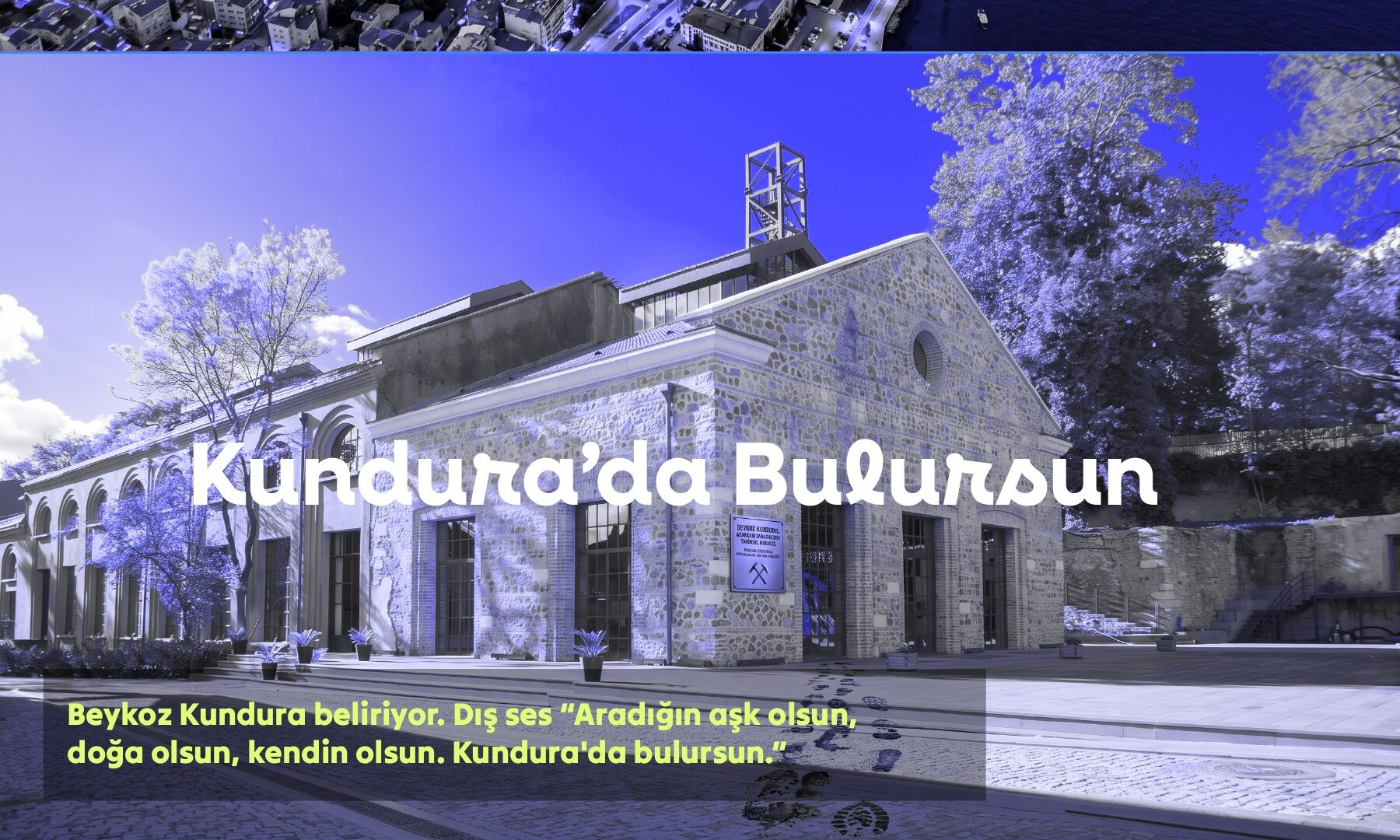
hikâyeye çevirdik: Aradığın aşk olsun, doğa olsun, kendin olsun ya da bir ses: Kundura'da bulursun.
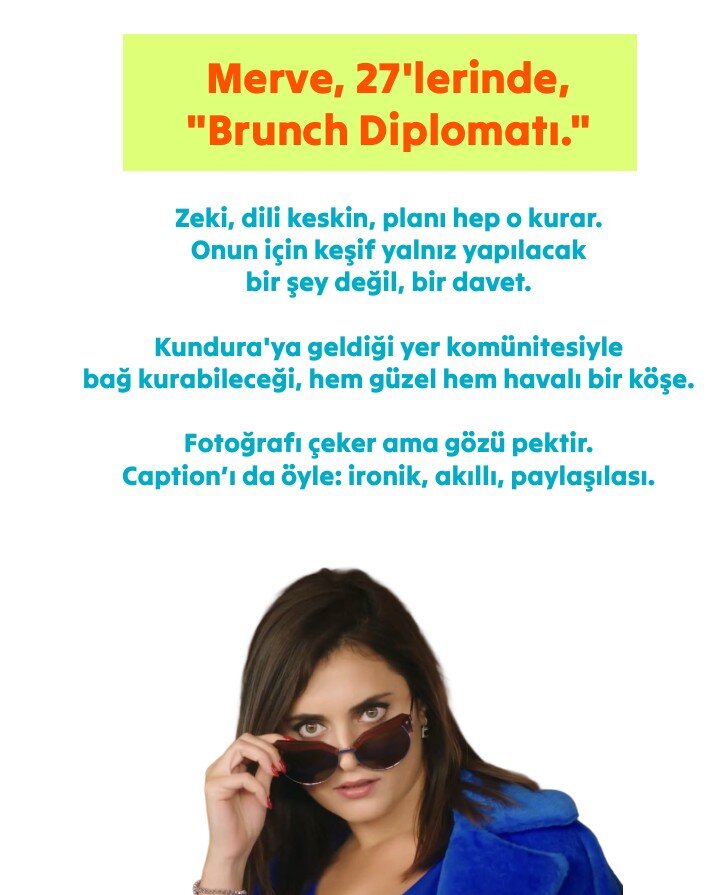
hedef kitle
▶ persona_merve.jpg
key visuals
▶ key_visual_afis.jpg
▶ key_visual_serisi.jpg
teaser
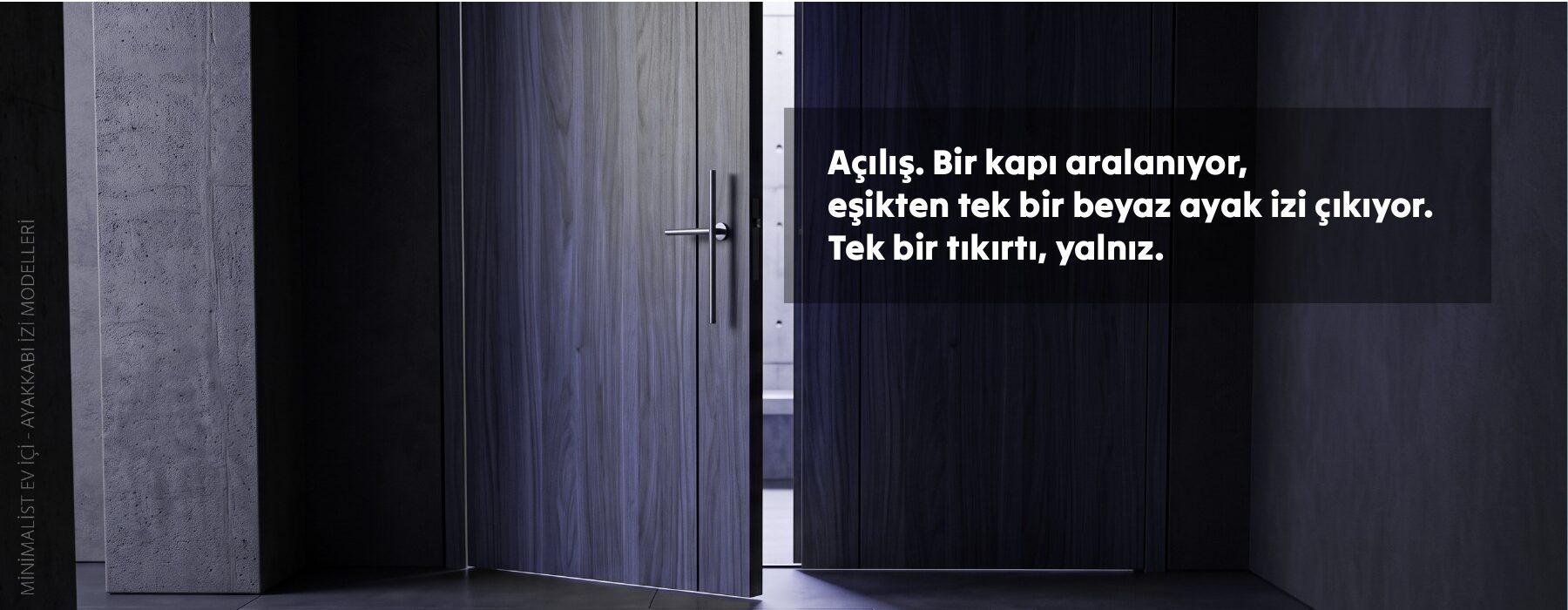
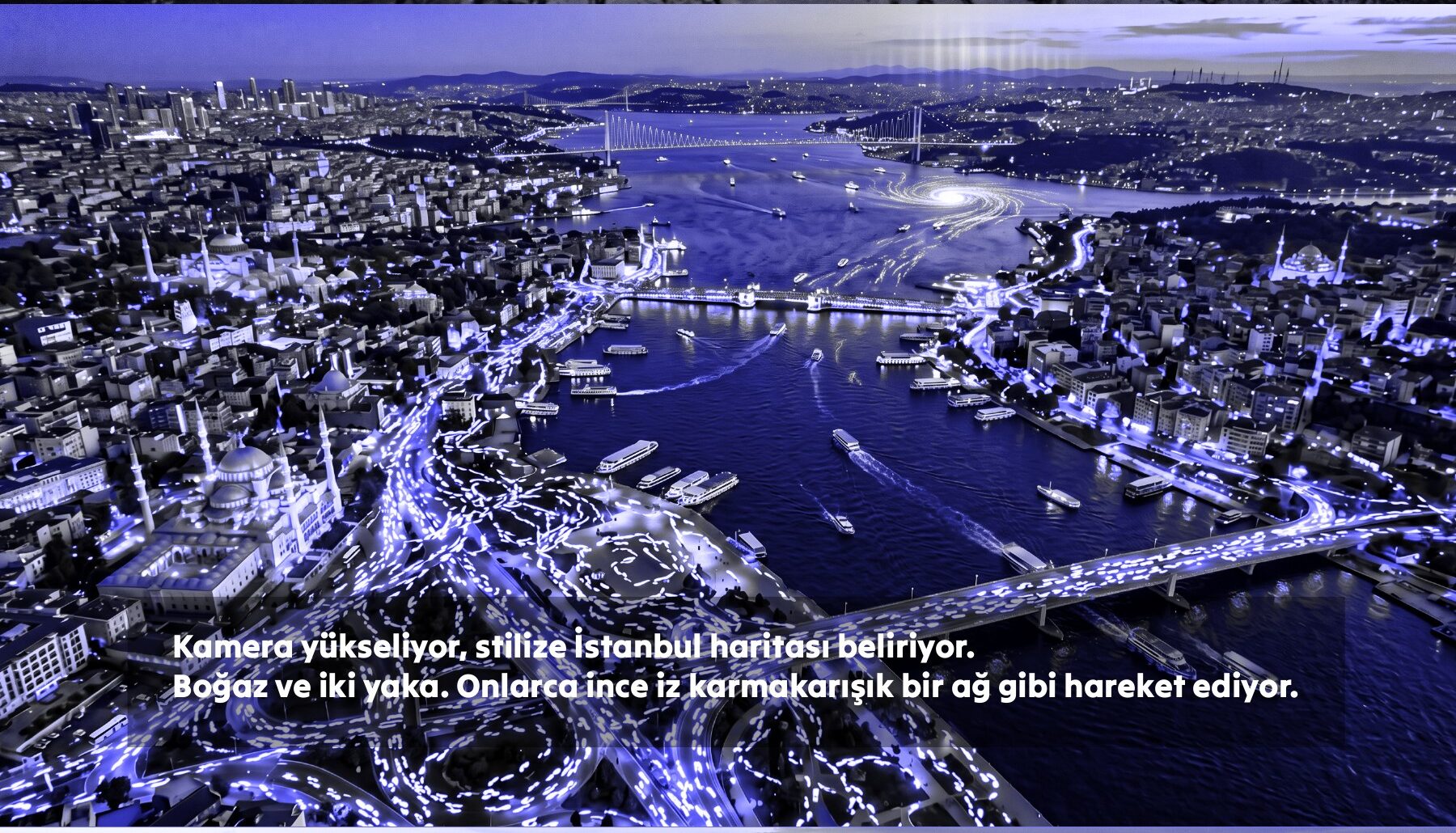
▶ teaser_kare_1.jpg
▶ teaser_kare_2.jpg
▶ teaser_kare_3.jpg
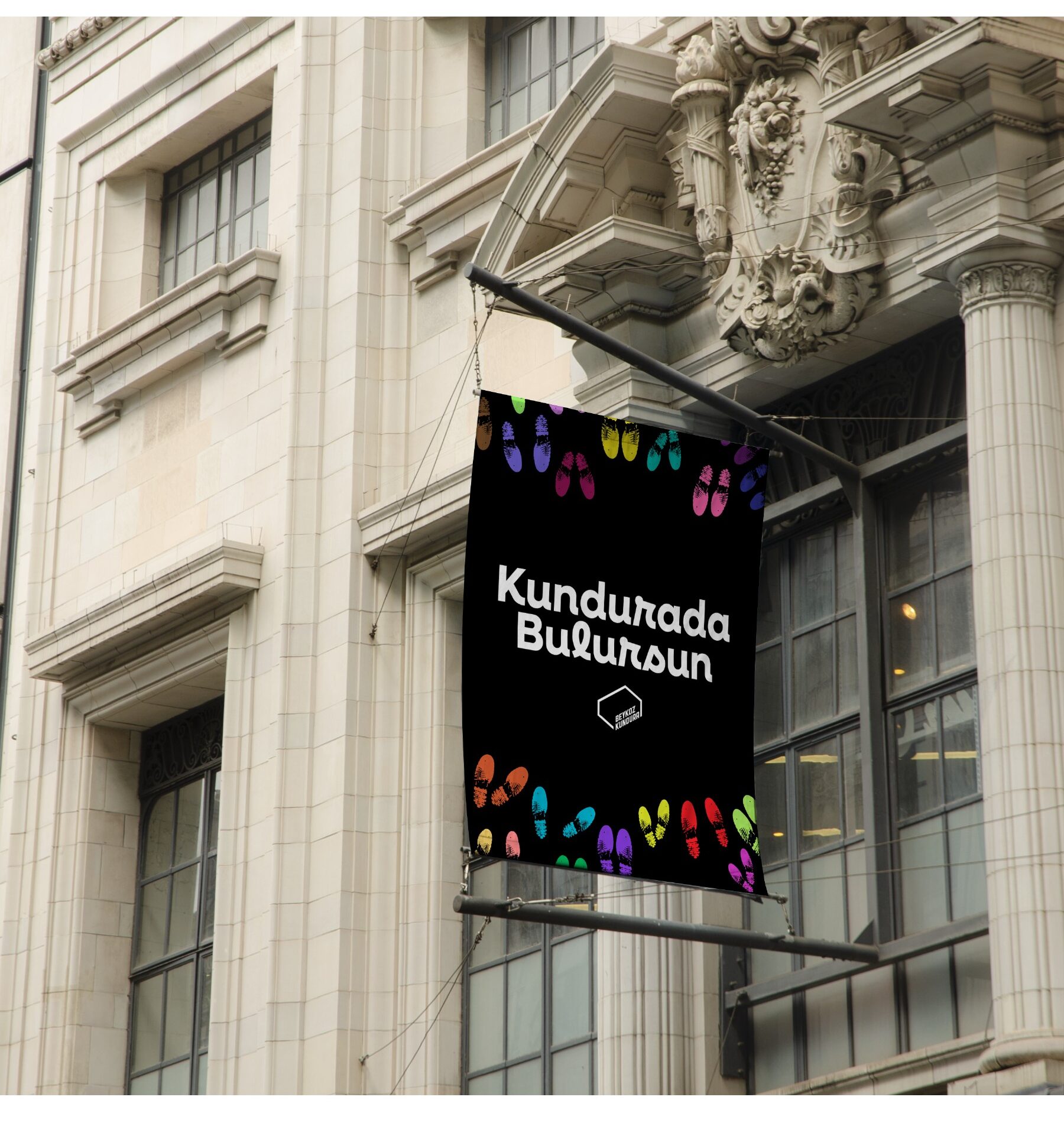
ooh
▶ ooh_ayak_izleri.jpg
✧ KUNDURADA BULURSUN ✧ ARAYAN ZATEN BULUR ✧ KÜLTÜR ORADA ✧ HAFIZA ORADA ✧ SEN DE ORADASIN ✧
🔮✨ FRESH ✨
STAY WEIRD
Genç Kristal × Aposto 2026
🌐 aposto.com/hesapta-yoktu
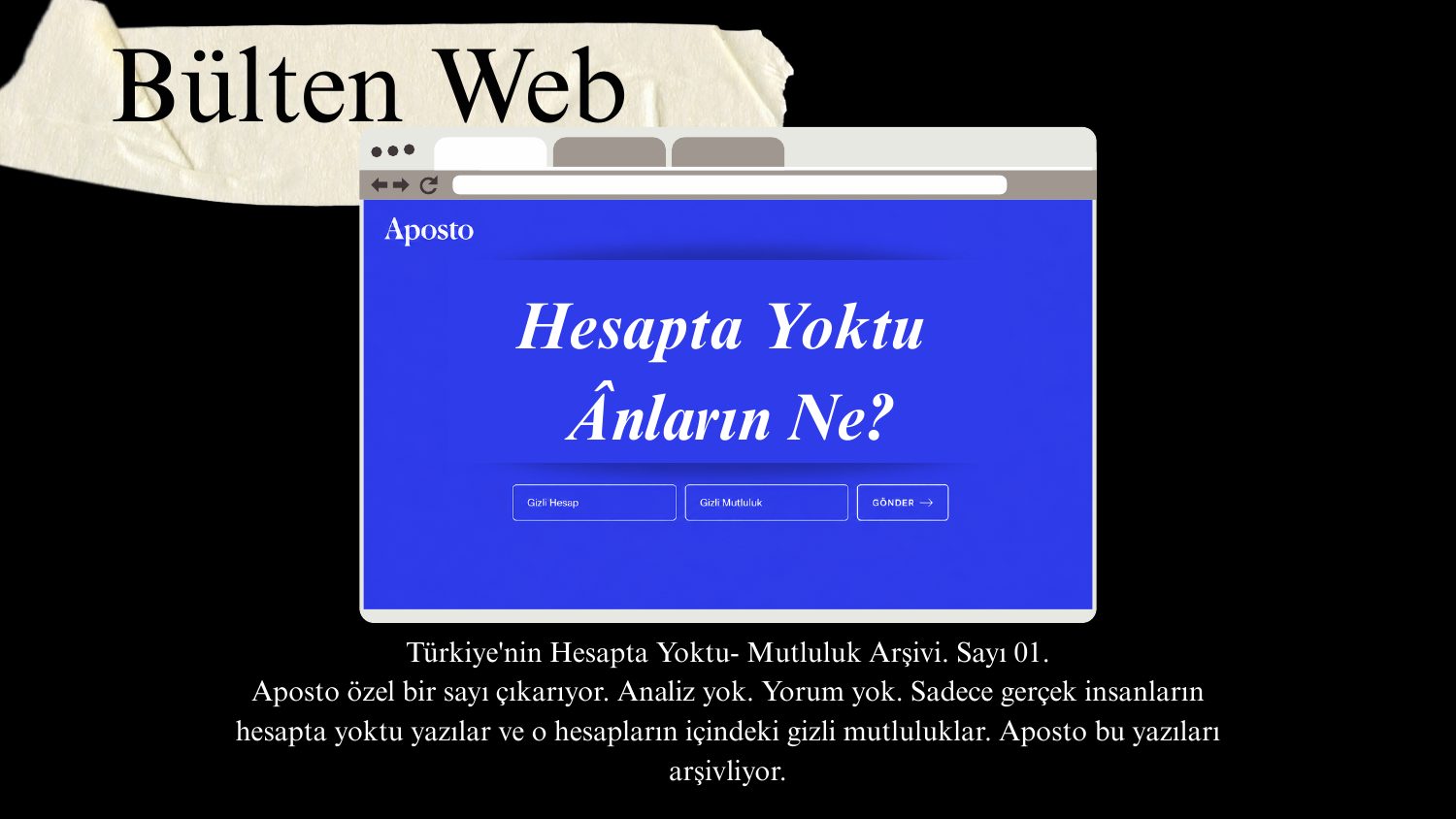
Hesapta Yoktu Ânların Ne?
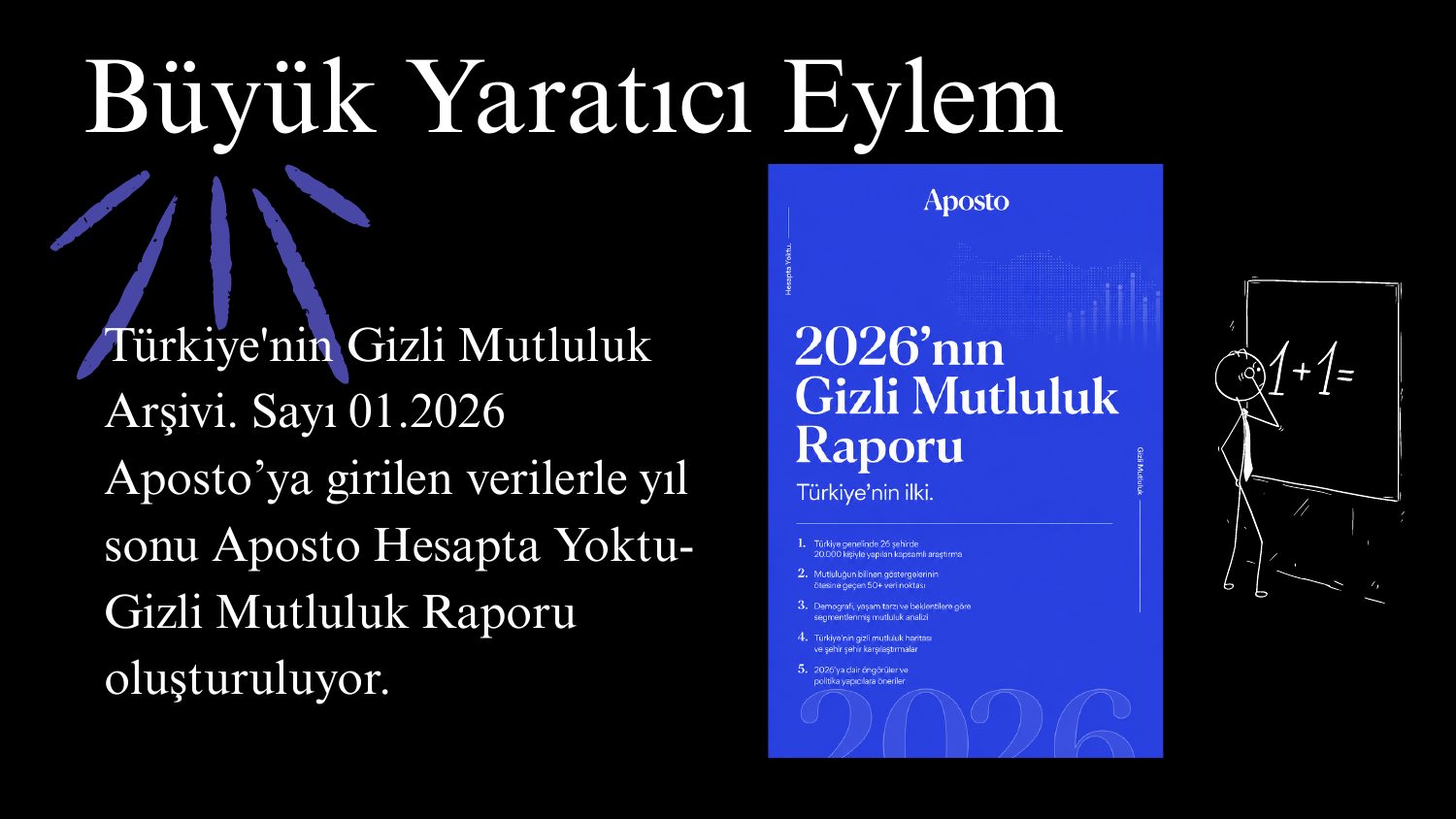
Türkiye'nin Hesapta Yoktu — Mutluluk Arşivi. Sayı 01.
yükleniyor
78%
Kriz anlarında kültür doğar. Yöntemi alıyoruz, tonu değil.
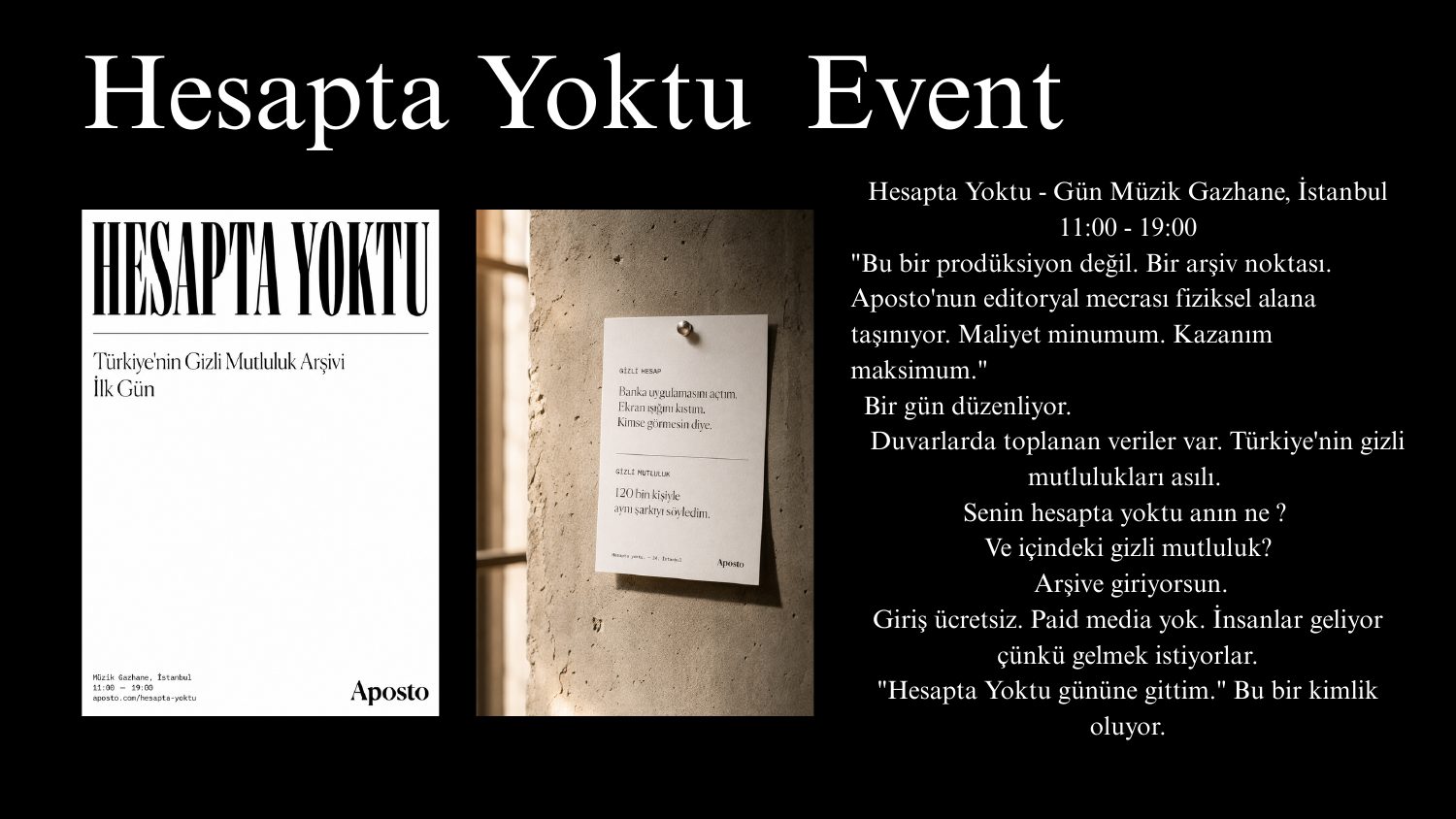
Giriş ücretsiz. Paid media yok. İnsanlar geliyor çünkü gelmek istiyorlar.
"Hesapta Yoktu gününe gittim." Bu bir kimlik oluyor.
SLOGAN: "Hesapta Yoktu." — Aposto.
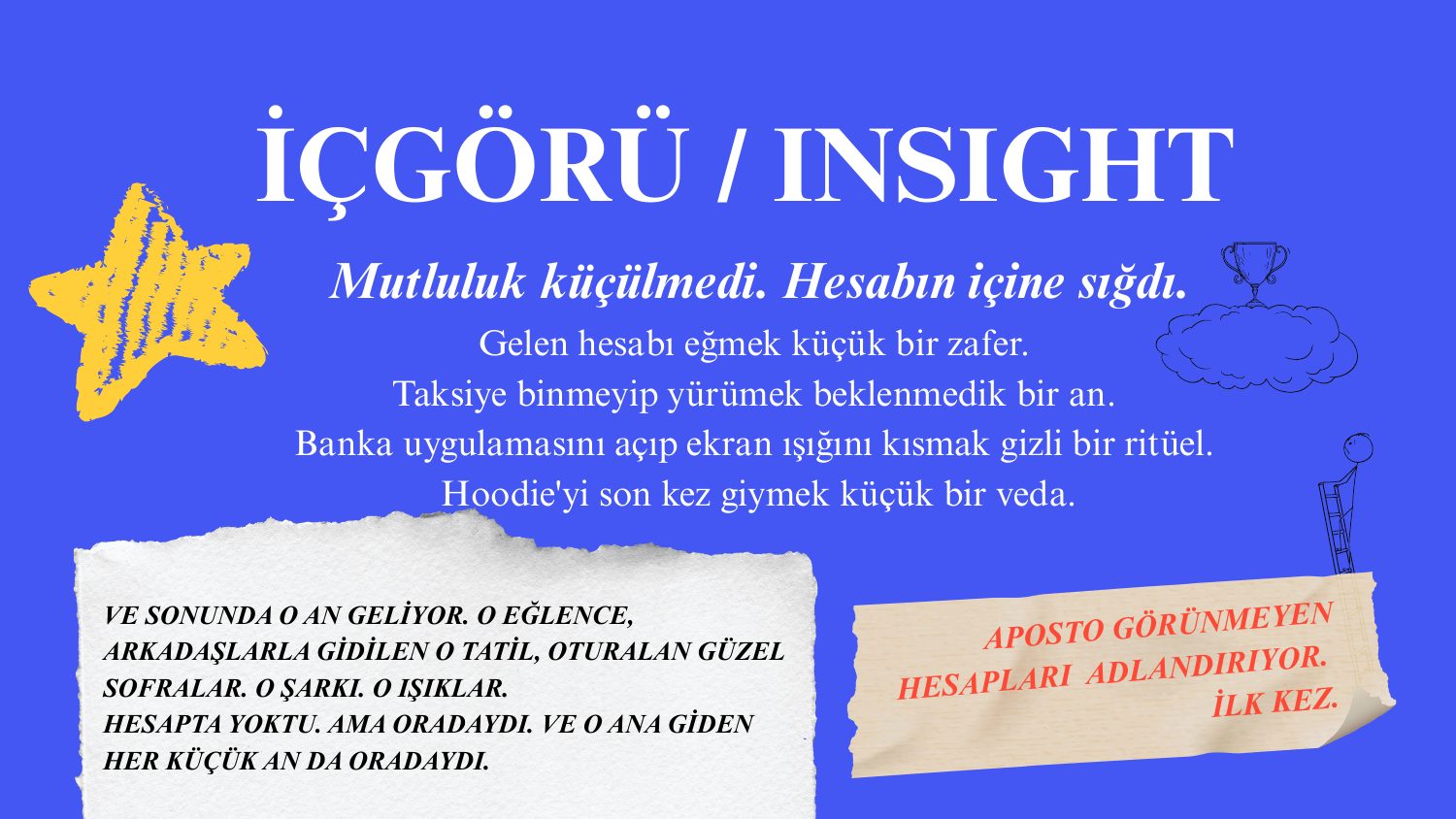
İÇGÖRÜ: "Mutluluk küçülmedi. Hesabın içine sığdı."
HEDEF KİTLE: "Gizli hesap yapan kuşak": üniversiteliler ve yeni mezun juniorlar
EKİP: 2 kişi (Duru Beste Saka & Gülsu Karakaş)
büyük fikir
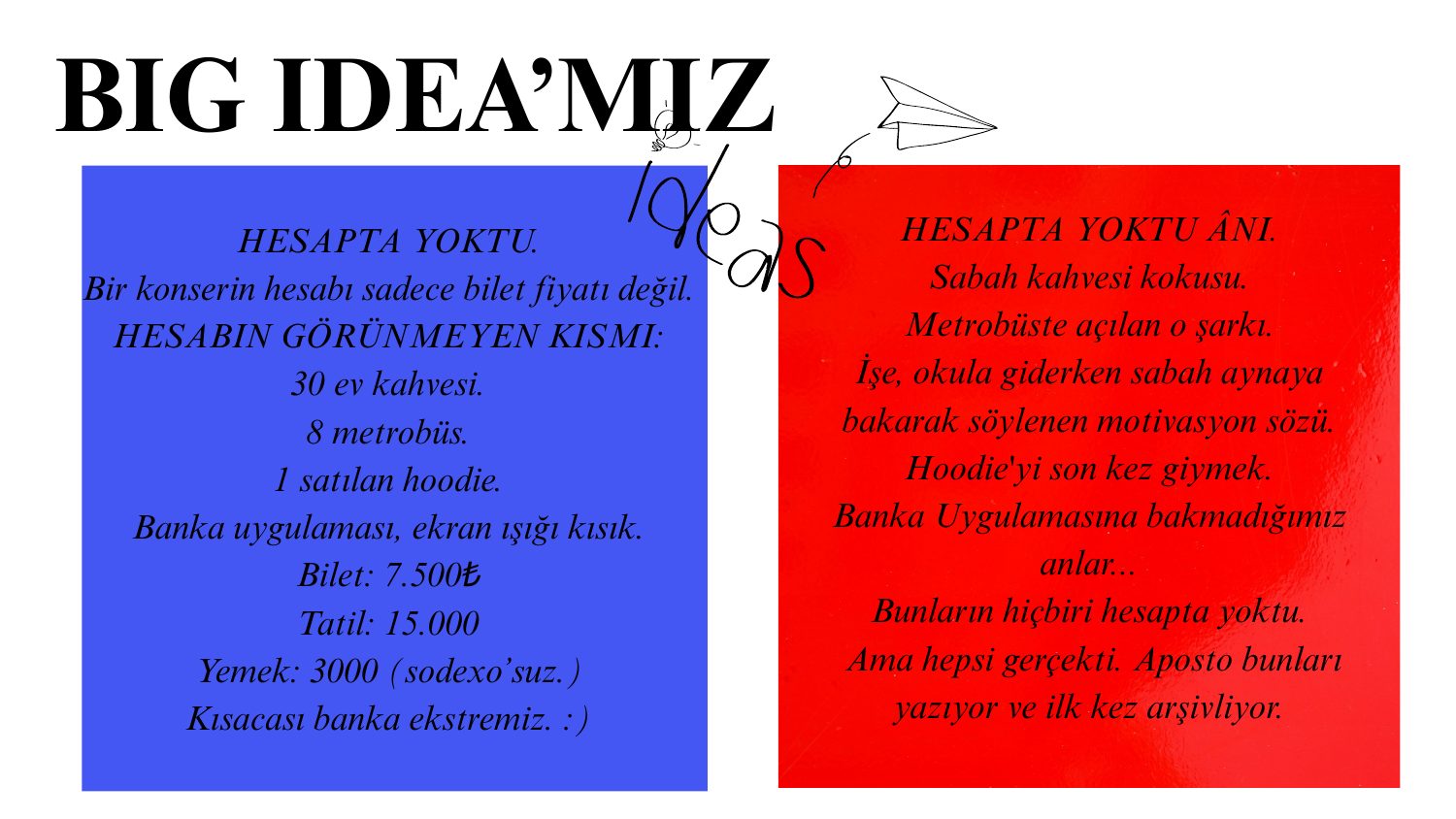
Fomo bitti, gizli mutluluk başladı. Bu kuşak spontane değil, planlı: bir konser bileti için 30 ev kahvesinden vazgeçiyor. O hesabın görünmeyen kısmını kimse yazmıyor. Aposto yazıyor ve ilk kez arşivliyor.
▶ icgoru.jpg
▶ big_idea_hesapta_yoktu.jpg
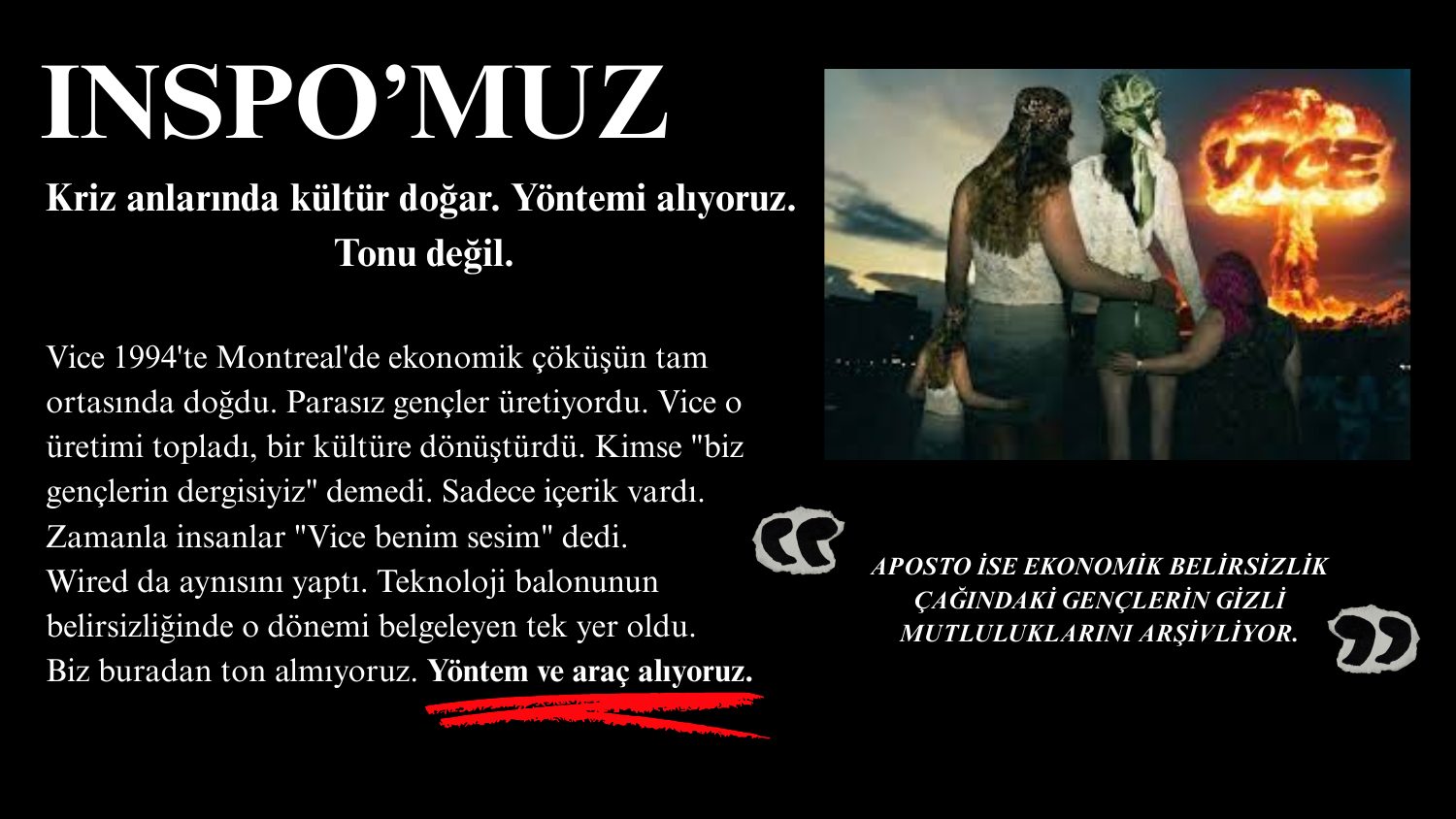
ilham: vice
Vice 1994’te Montreal’de ekonomik çöküşün ortasında doğdu, parasız gençlerin ürettiklerini bir kültüre dönüştürdü. Wired de teknoloji balonunda aynısını yaptı. Biz buradan ton almadık, yöntemi ve aracı aldık: kriz anlarında kültür doğar.
▶ inspo_vice.jpg
mecralar
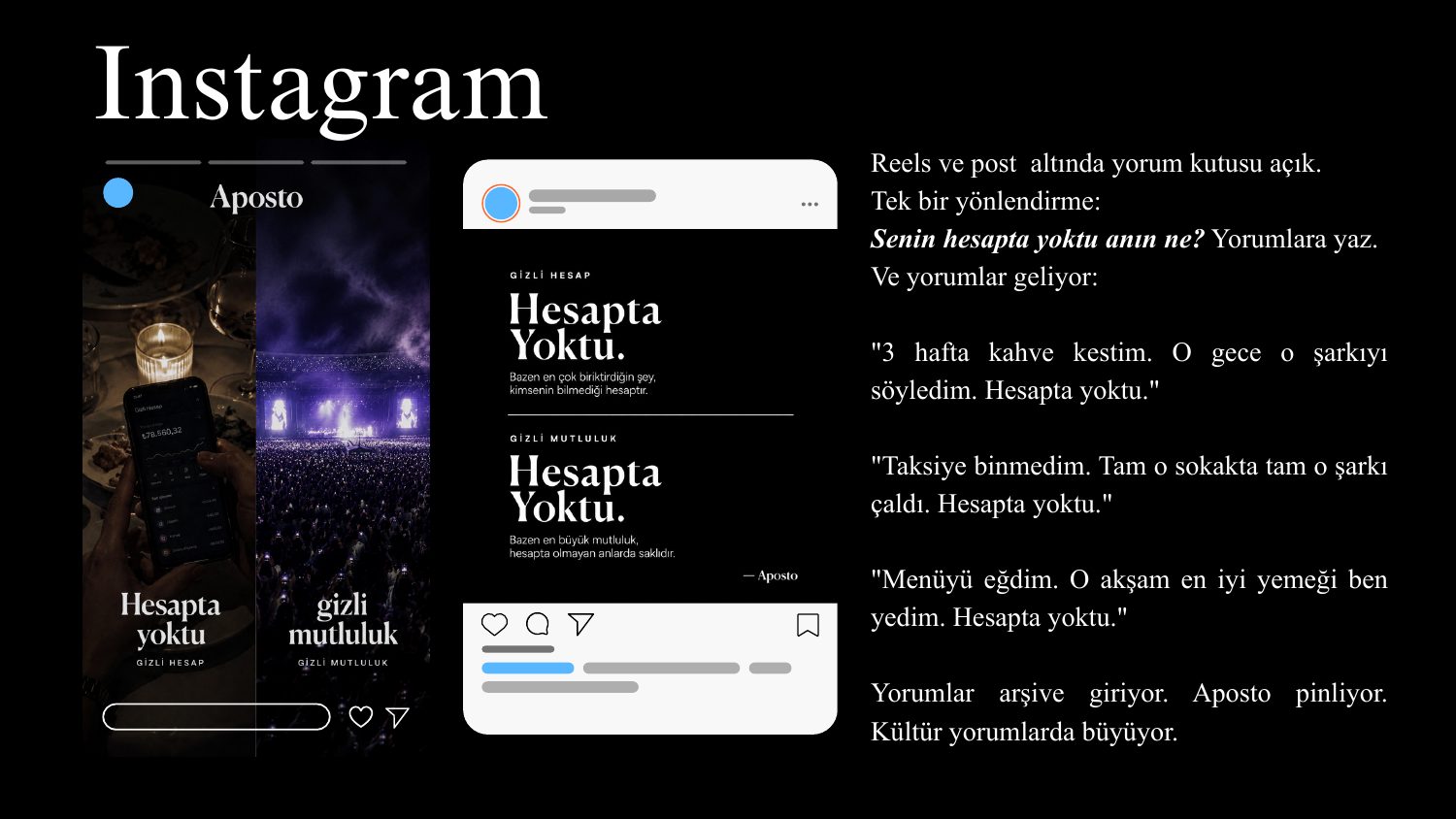
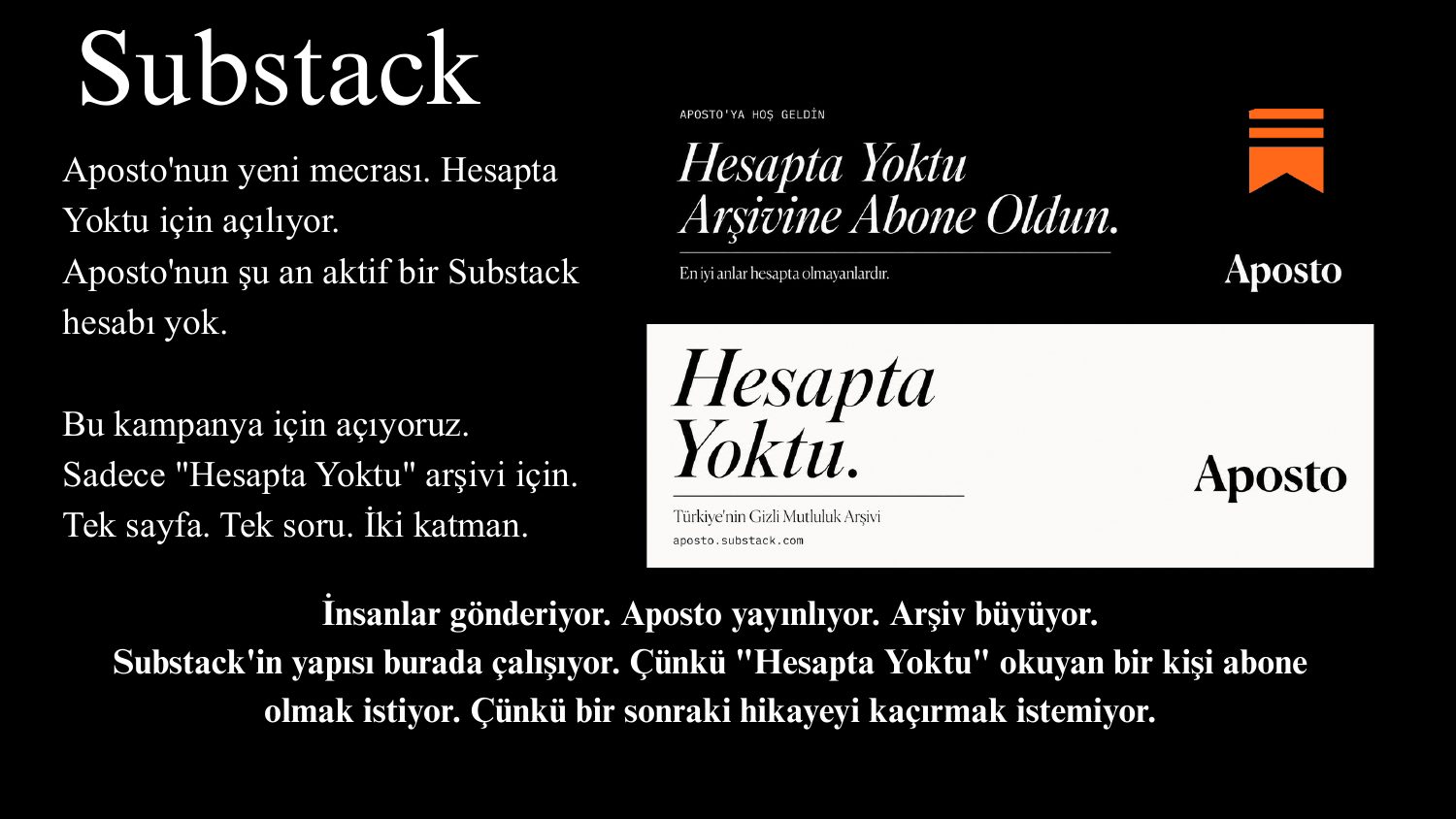
Tek fikir, Aposto’nun kendi mecralarında. Paid media yok: güven zaten var, kampanya onu aktive ediyor. Her mecra aynı kapıya çıkıyor: Senin hesapta yoktu anın ne?
▶ bulten_web.jpg
▶ instagram.jpg
▶ substack.jpg
event ve rapor
Gün Müzik Gazhane’de 200-300 kişilik davetli bir arşiv günü: önce hikayeni yazıyorsun, sonra davet alıyorsun. Yıl sonunda toplanan verilerle “Türkiye’nin Gizli Mutluluk Raporu” yayımlanıyor.
▶ event_gazhane.jpg
▶ gizli_mutluluk_raporu.jpg
🍊Coca-Cola & Ogilvy'ye sunuldu · 23 grup içinden 1. seçildi 🏆
Fanta Bitirme Projesi
ICONIC
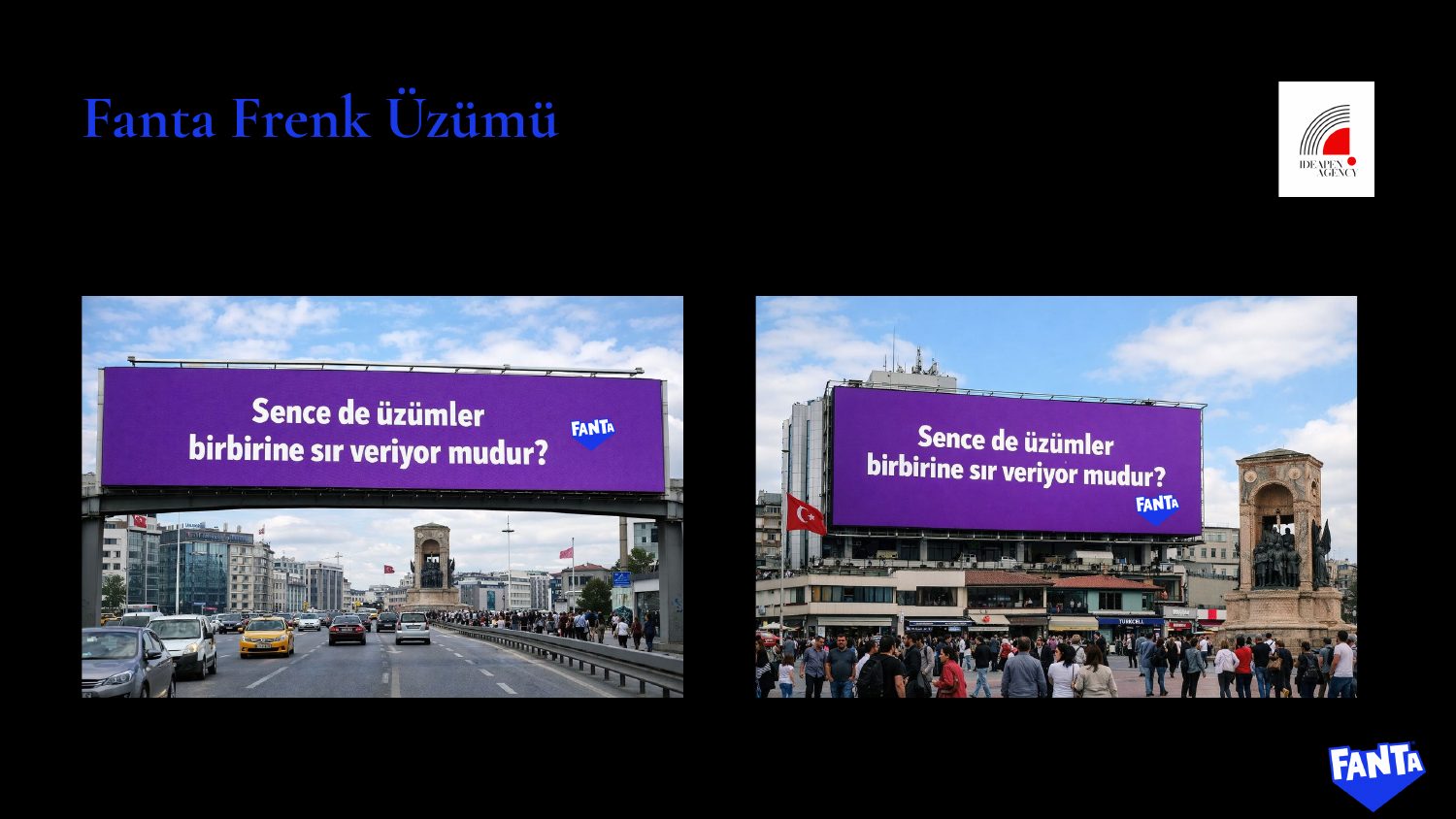
"Sence de üzümler birbirine sır veriyor mudur?"
▶ billboard_taksim.mp4
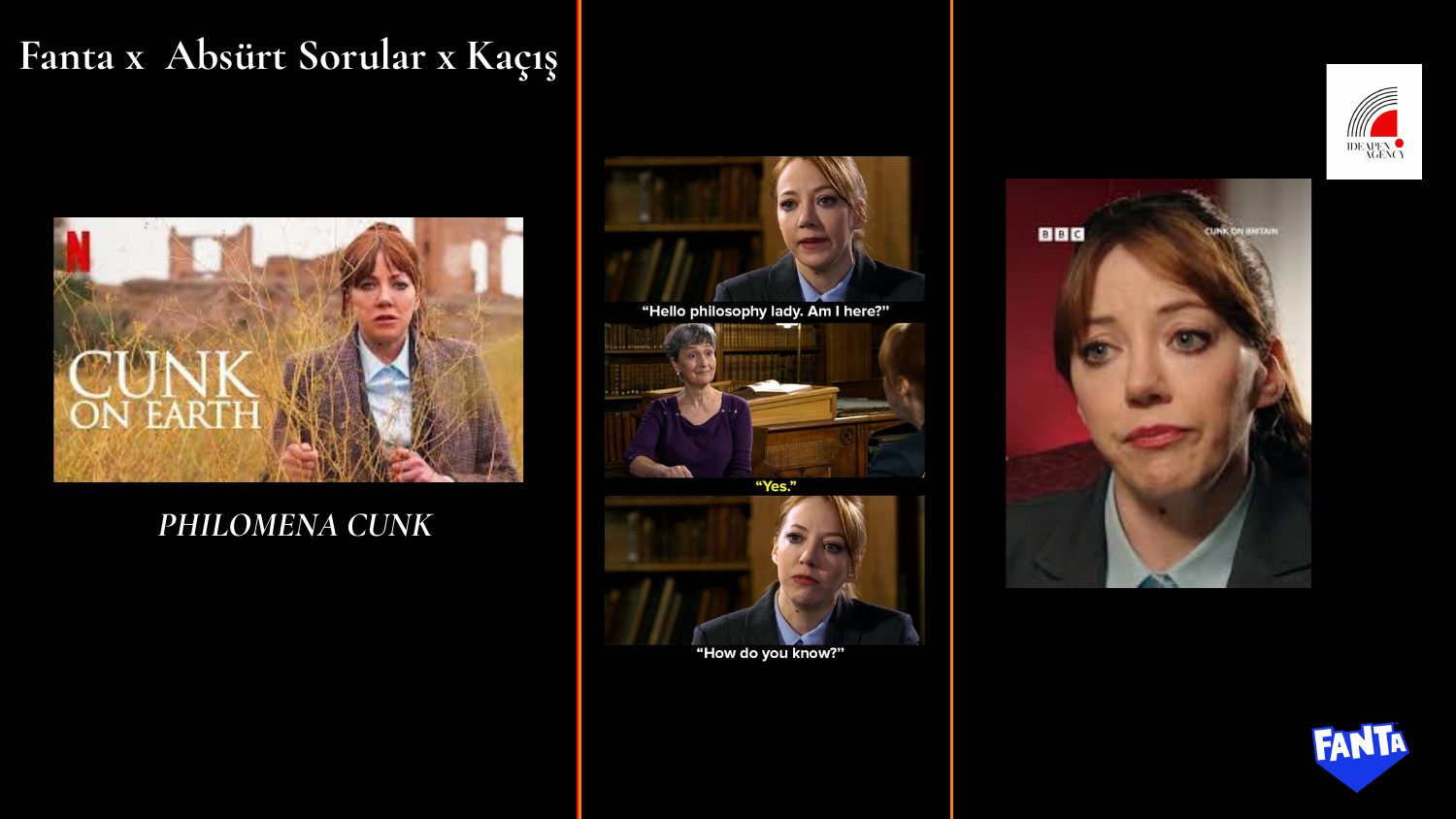
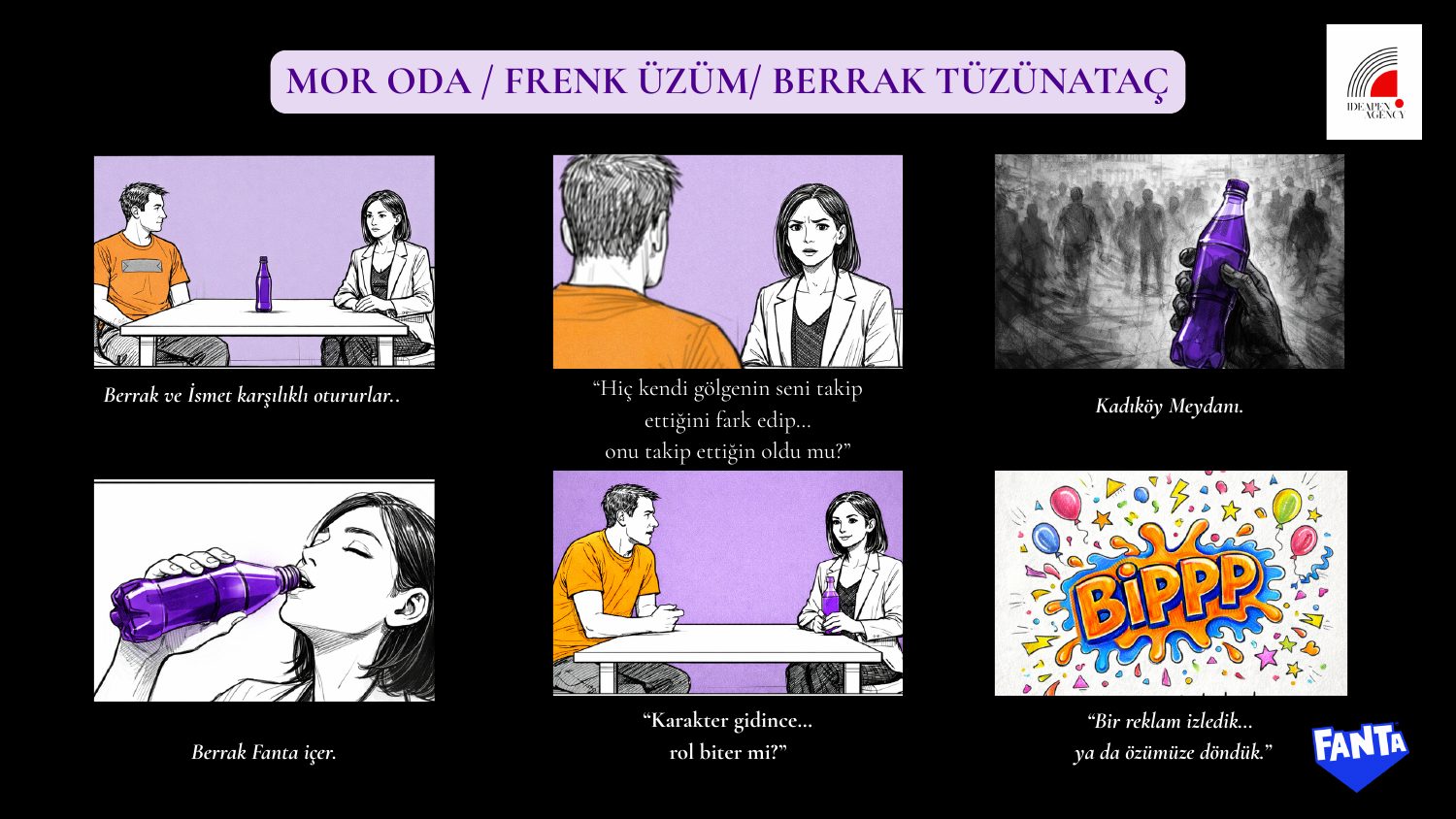
Philomena Cunk referanslı, Kadıköy meydanına taşan bir "kendi gölgeni takip ettin mi" hikâyesi.
ilham: cunk on earth
▶ ilham_philomena_cunk.jpg
🏆 sonuc.exe
Coca-Cola ve Ogilvy ajansına sunuldu. 23 grup içinden 1. seçildi.
SLOGAN: "Bir reklam izledik… ya da özümüze döndük."
İÇGÖRÜ: "Dünya fazlasıyla ciddi; bazen tek kaçış, Fanta gibi hissetmektir."
HEDEF KİTLE: Efe, 21, üniversite öğrencisi. Absürt içeriğe hızlı tepki verir.
EKİP: IdeaPen Agency
⚠ big-idea.exe✕
BRİEF: Fanta sevilen bir lezzet ama genç tüketicinin zihninde arzu ve kültürel bağ zayıflamış.
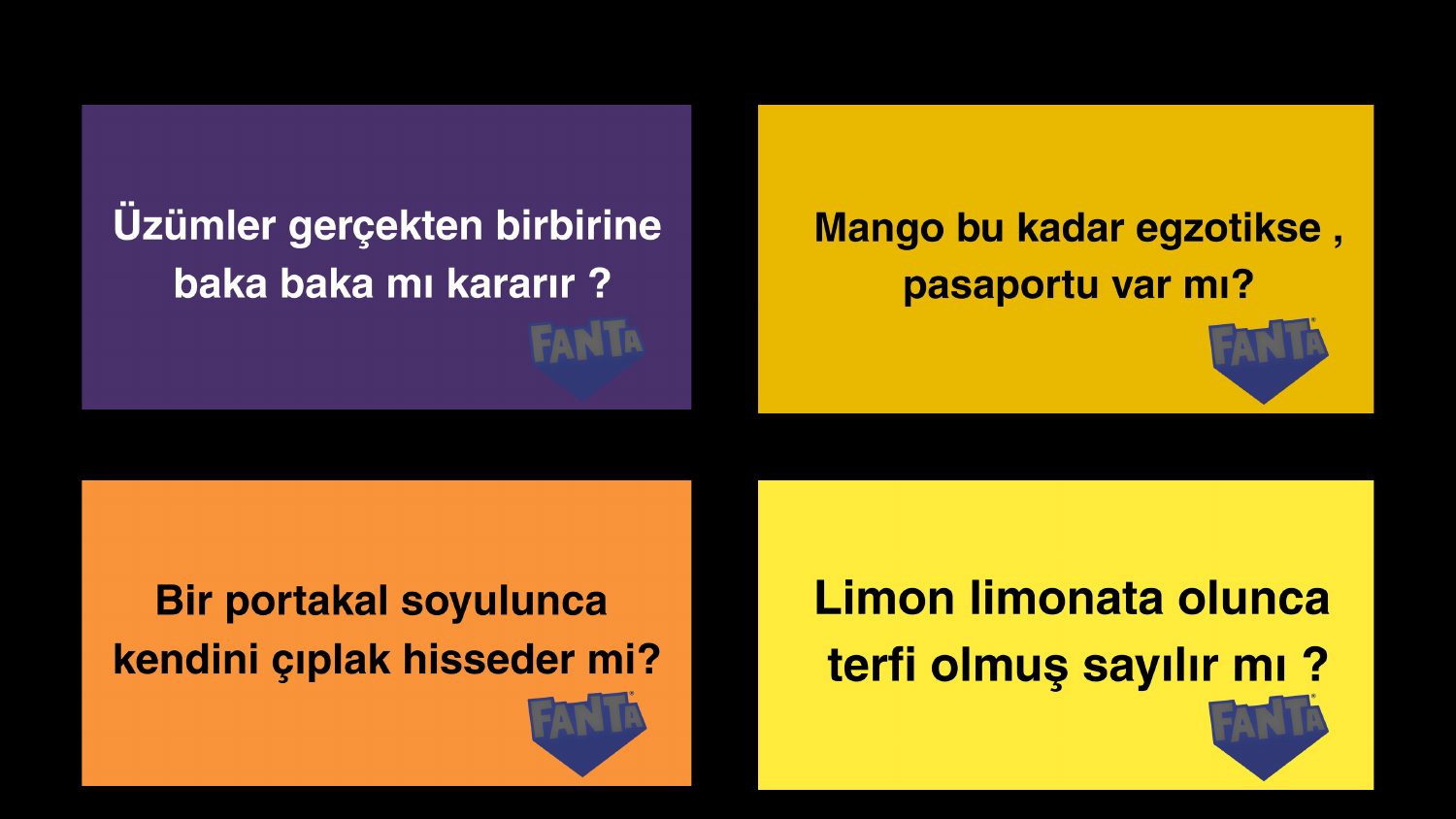
FİKRİMİZ: Fanta'nın meyvelerini soru soran ama cevap aramayan absürt karakterlere dönüştürdük.
TV'de İsmet Ve'nin ünlülere cevapsız sorular sorduğu bir talk show serisi kurduk. Soru gelir, kafa karışır,
Fanta içilir, gerçeklik yavaşlar. Aynı dil radyoda, dijitalde, açıkhavada ve deneyim alanlarında devam etti.
tv reklam serisi
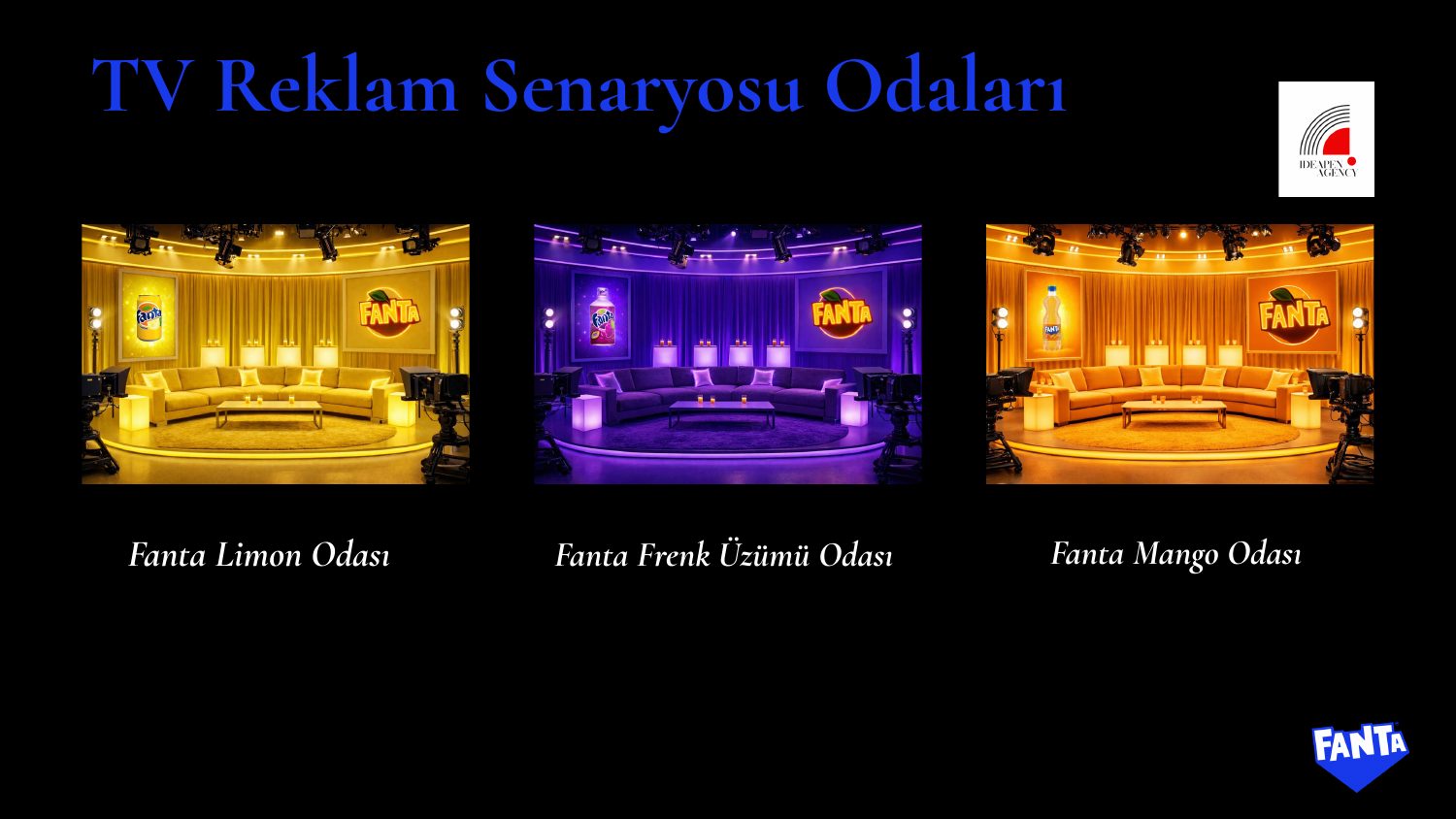
Üç aroma, üç oda: Limon, Frenk Üzümü ve Mango. Her odada İsmet Ve'nin farklı bir konuğu ve farklı bir absürt sorusu var.
▶ tv_odalari.jpg
▶ storyboard_mor_oda.jpg
açıkhava
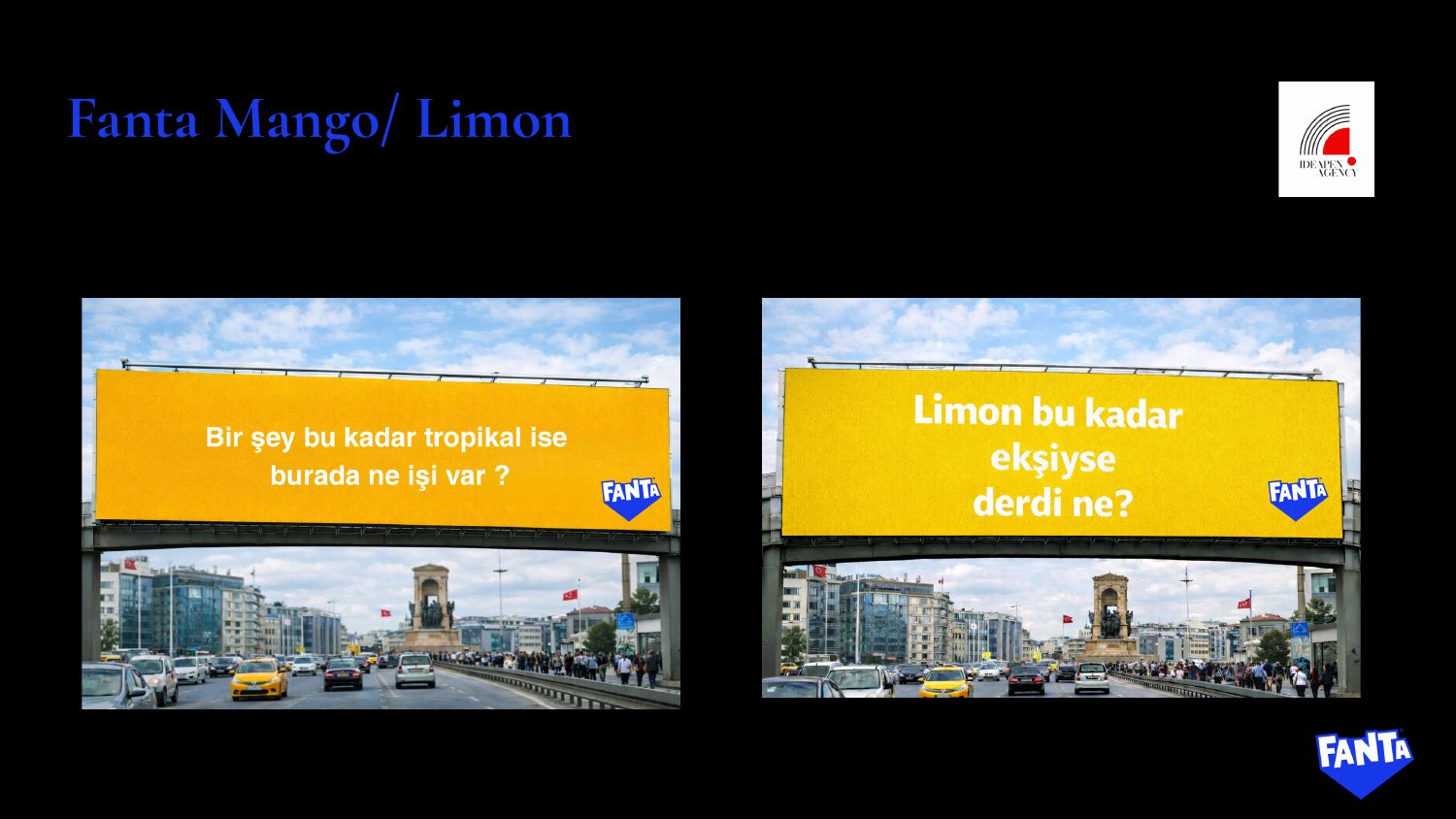
Ürünü göstermedik, merakı gösterdik. Taksim, E-5 ve TEM hattında 2-3 saniyede dikkat çeken tek cümlelik sorular.
▶ billboard_frenk_uzumu.jpg
▶ billboard_mango_limon.jpg
dijital
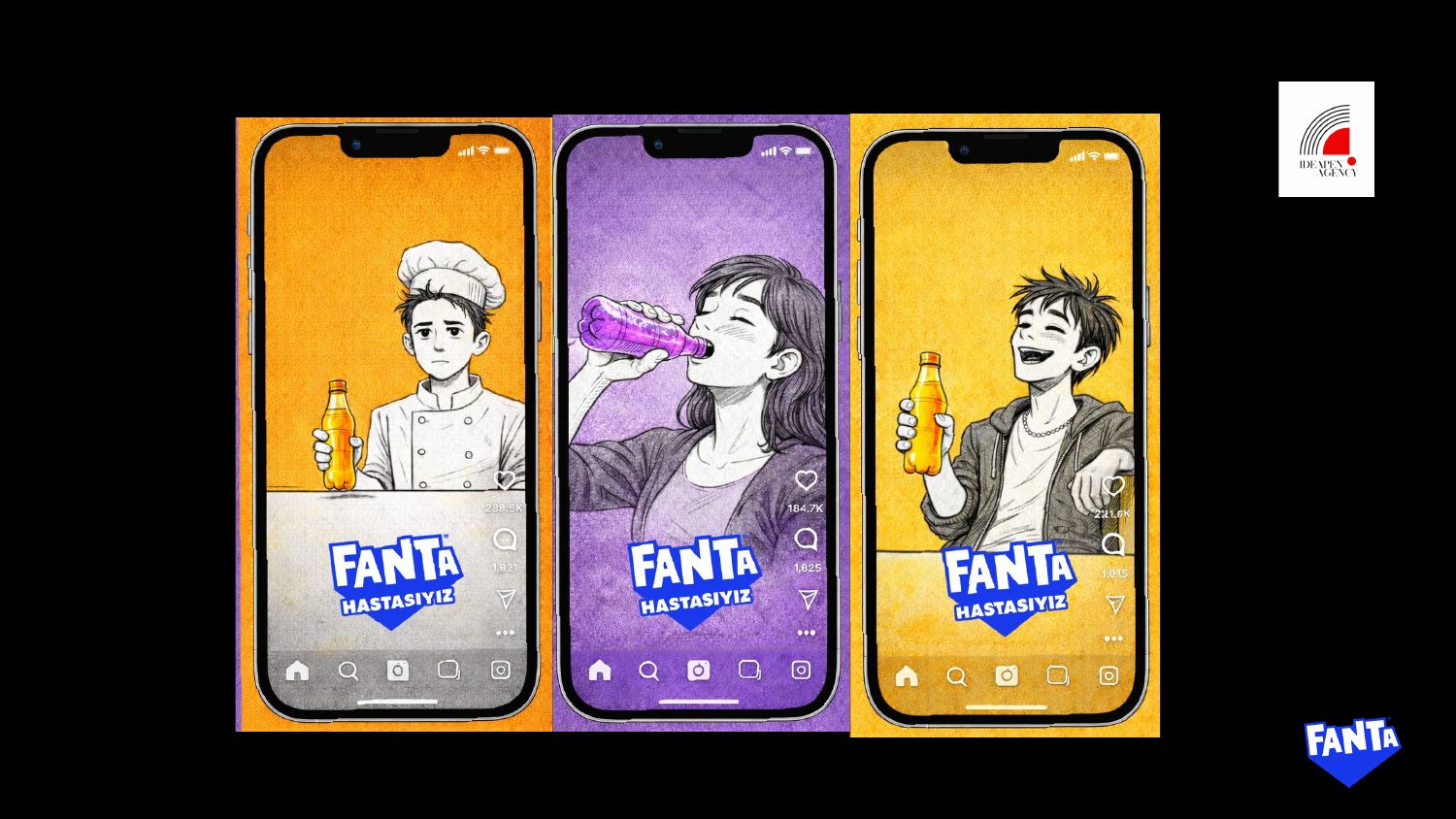
YouTube, Instagram ve TikTok'ta aynı duraksama anı; dijital banner'larda kullanıcıya doğrudan sorulan absürt sorular.
▶ instagram_reklam.jpg
▶ dijital_banner.jpg
Kampanya ayrıca radyo (10 saniyelik 3 mikro senaryo), influencer ve podcast işbirlikleri, kiosklar (Fanta Fest bileti kazanma şansı) ve dört mevsimlik bir medya planıyla kurgulandı.
✧ ICONIC SINCE 2024 ✧ ÜZÜMLER SIR VERİYOR ✧ TAKSİM MEYDANI ONAYLADI ✧ FANTA BİTİRME PROJESİ ✧
🐣
✦✧✦
✧✦22 gruptan 1. çıktık 🏆vınn vınn
Çaylak Keşfi × Reklamcılık Vakfı
⚠ big-idea.exe✕
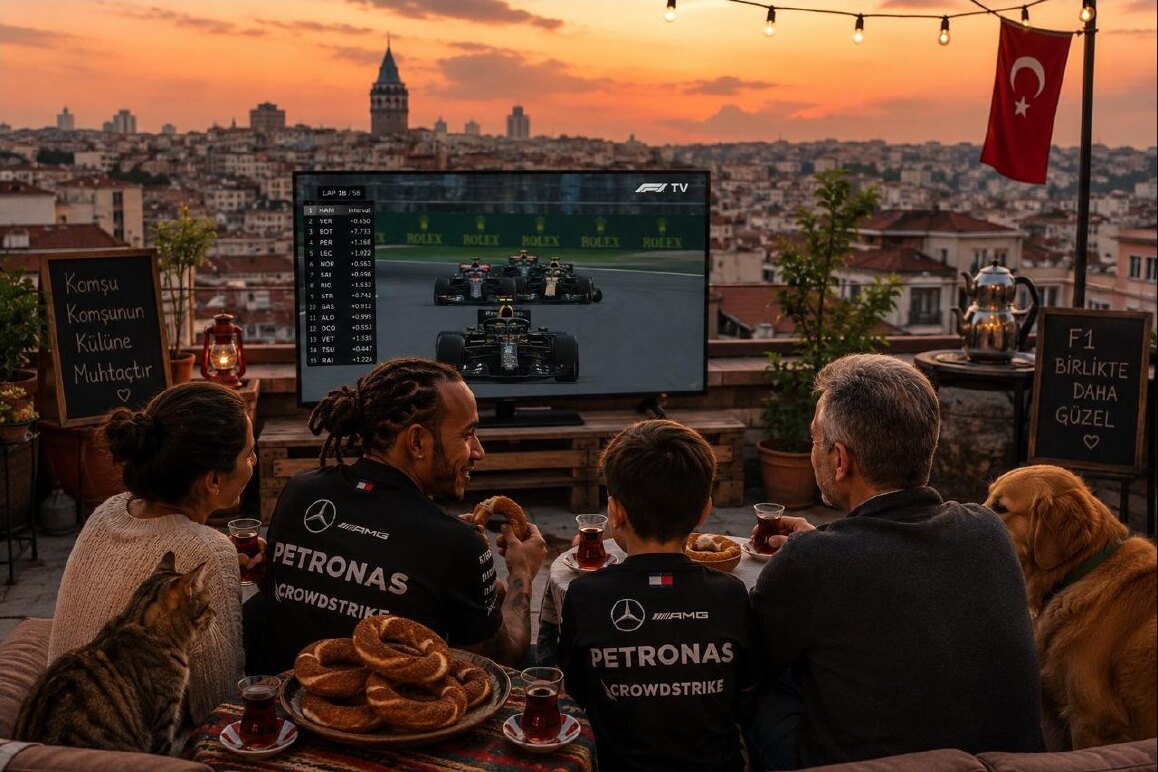
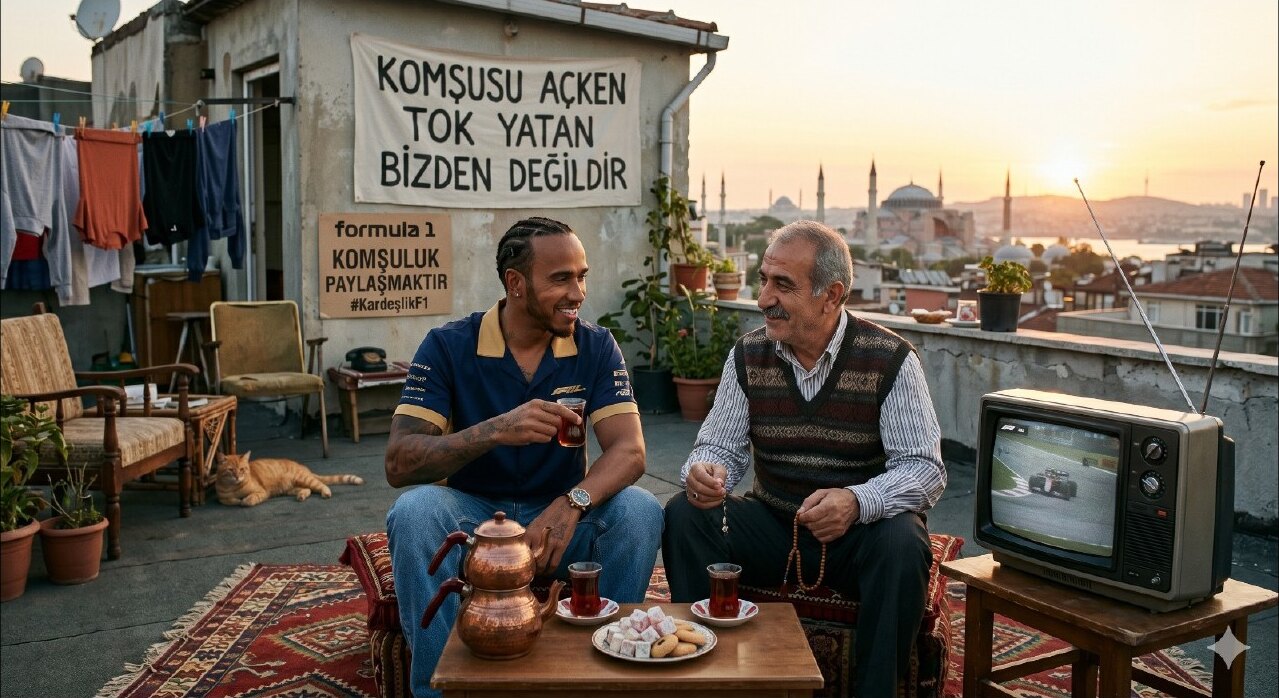
BIG IDEA'MIZ: "Komşu Komşunun Külüne Muhtaçtır"
"Bizim buralarda kapı çalındı mı 'kim o' denmez, 'hoş geldin' denir." Formula 1'in hızı,
bir komşunun "hadi izleyelim" davetinden daha kıymetli değil.
komşu komşunun külüne muhtaçtır
#KardeşlikF1
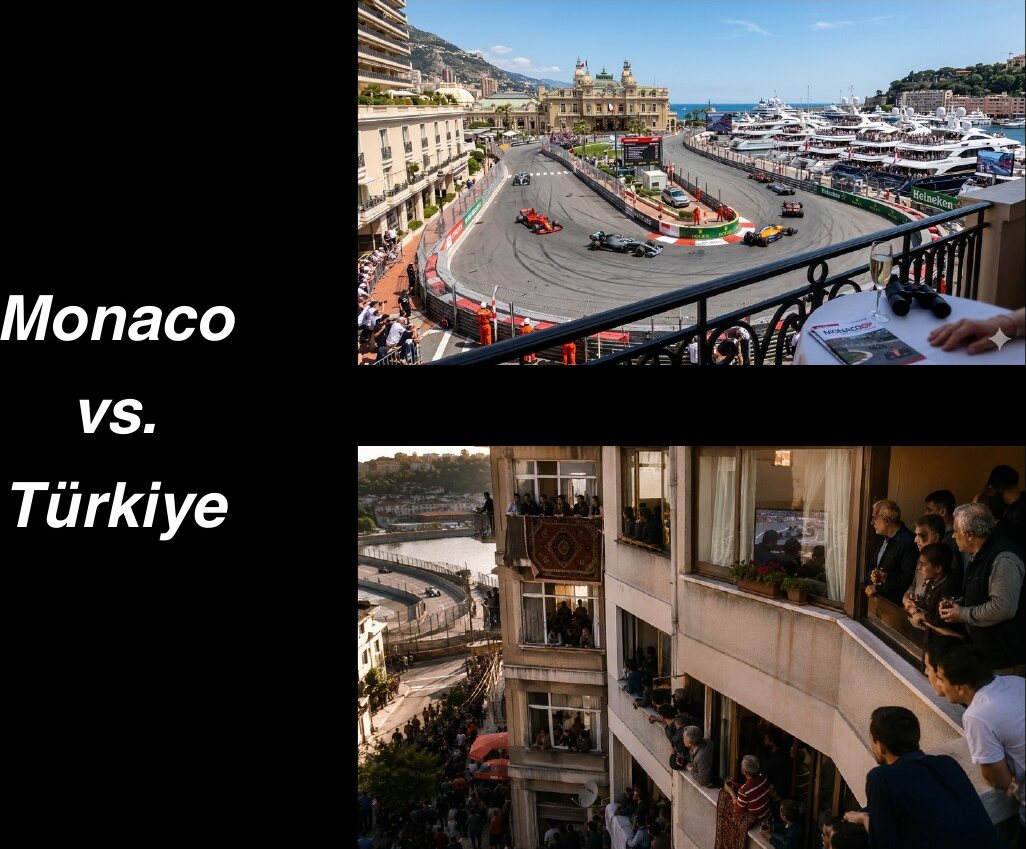
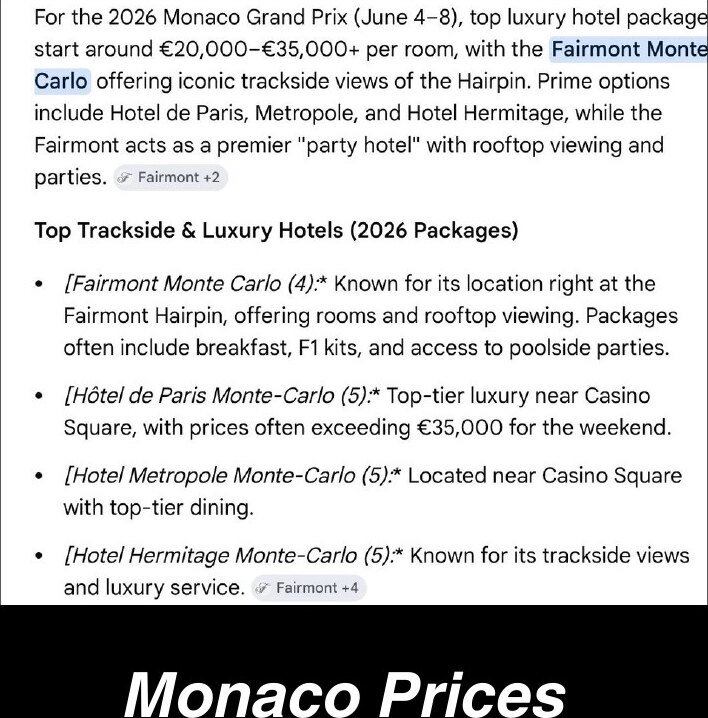
monaco vs. türkiye
Reklam filminde yarış günü bir Türk mahallesi gösterilir: balkonlarda çayla yarışı izleyen kalabalıklar, pisti gören evlerden sarkan mahalle sakinleri. Formula 1'in hızıyla mahalle kültürünün samimiyeti aynı görüntüde buluşur.
▶ monaco_vs_turkiye.jpg
▶ monaco_prices.jpg
🐼
ETİ × WWF Bitirme Projesi
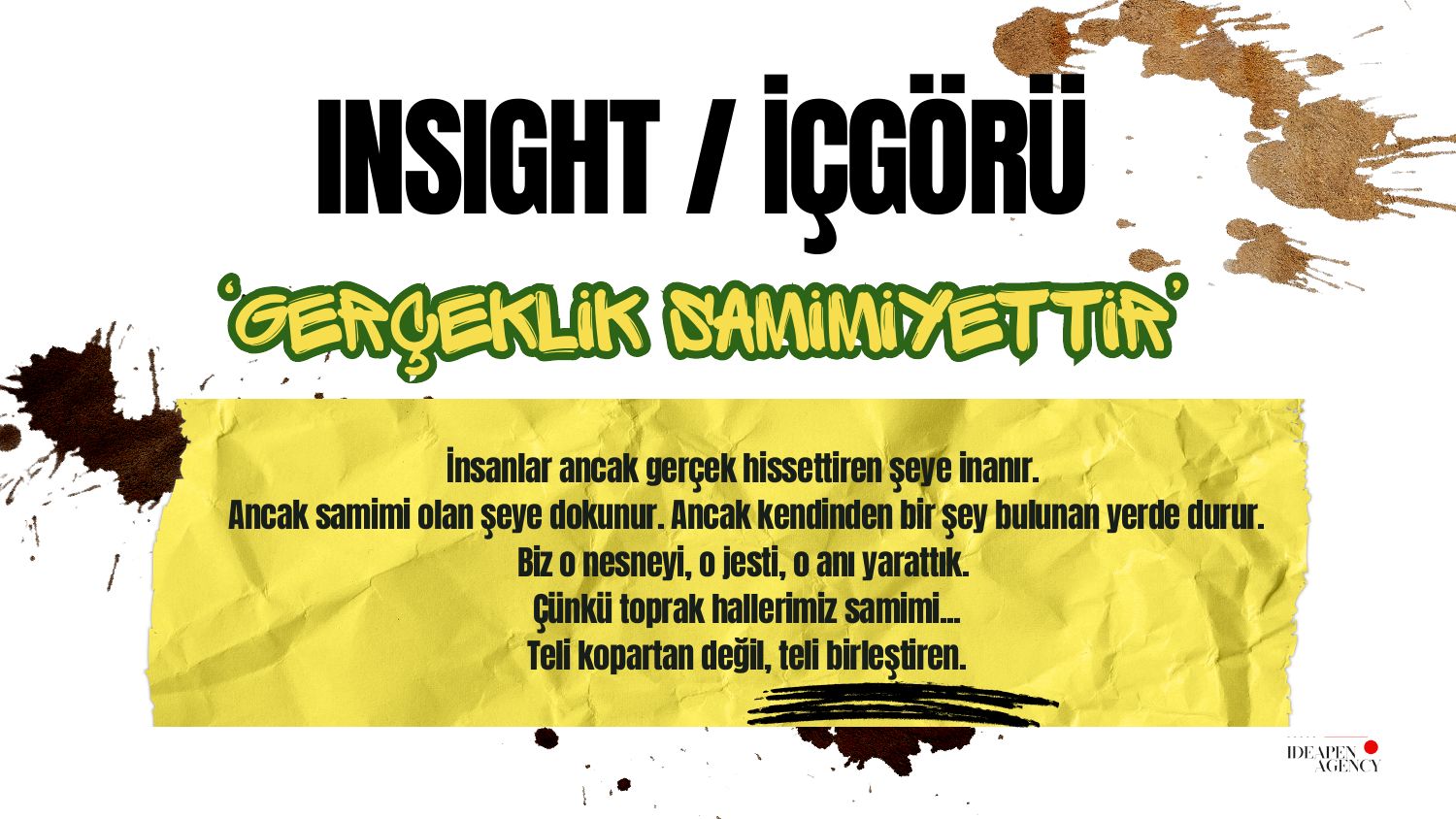
gerçeklik samimiyettir
LEGENDARY
SLOGAN: "Hepimiz toprak hareketinin bir parçasıyız."
İÇGÖRÜ: "Gerçeklik samimiyettir."
HEDEF KİTLE: 20-40 yaş beyaz yakalılar, üniversiteliler ve çiftçiler, yerel üreticiler
HASHTAG: #TOPRAKHALİMİZ
büyük fikir: görünmeyen tel
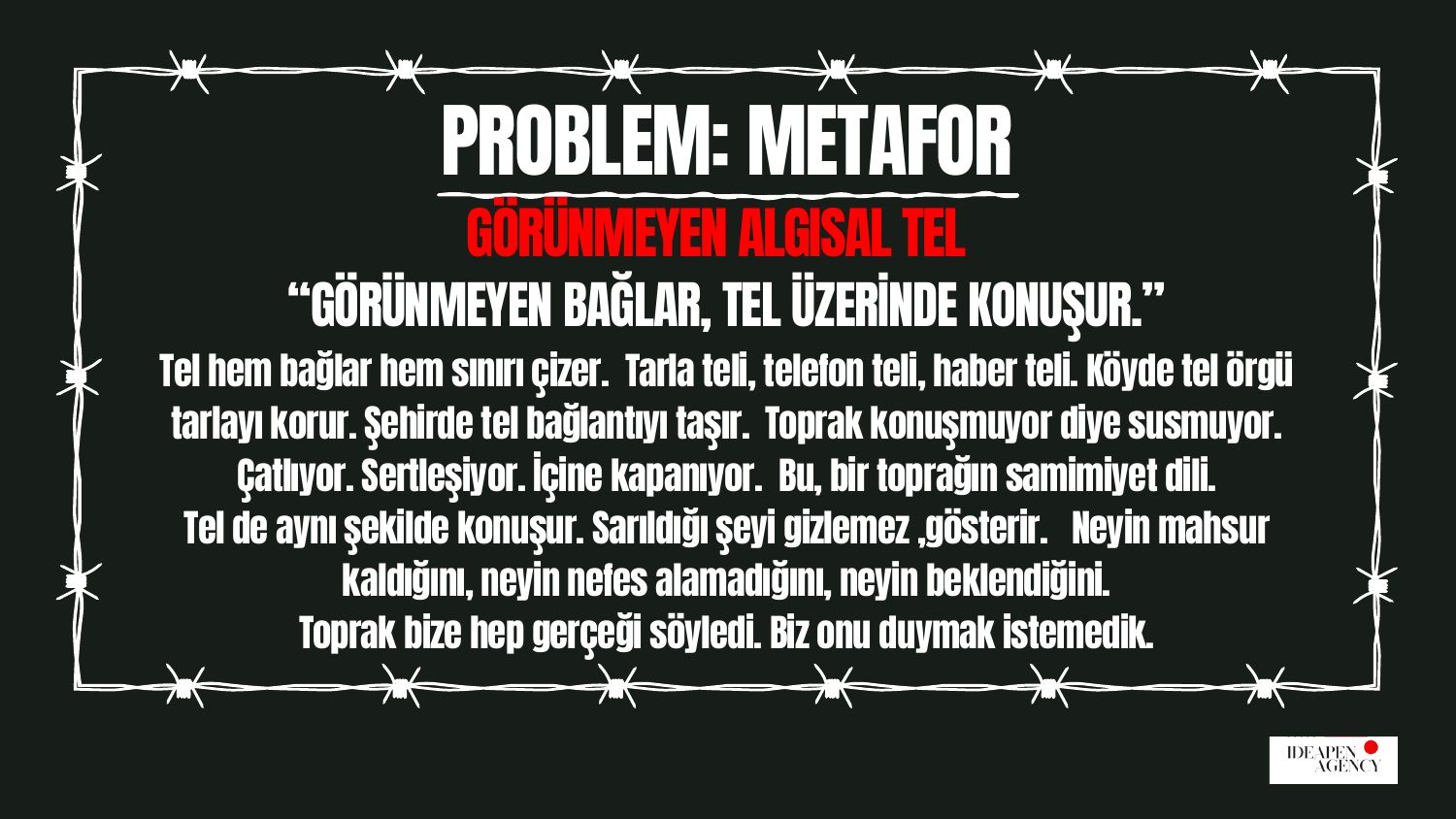
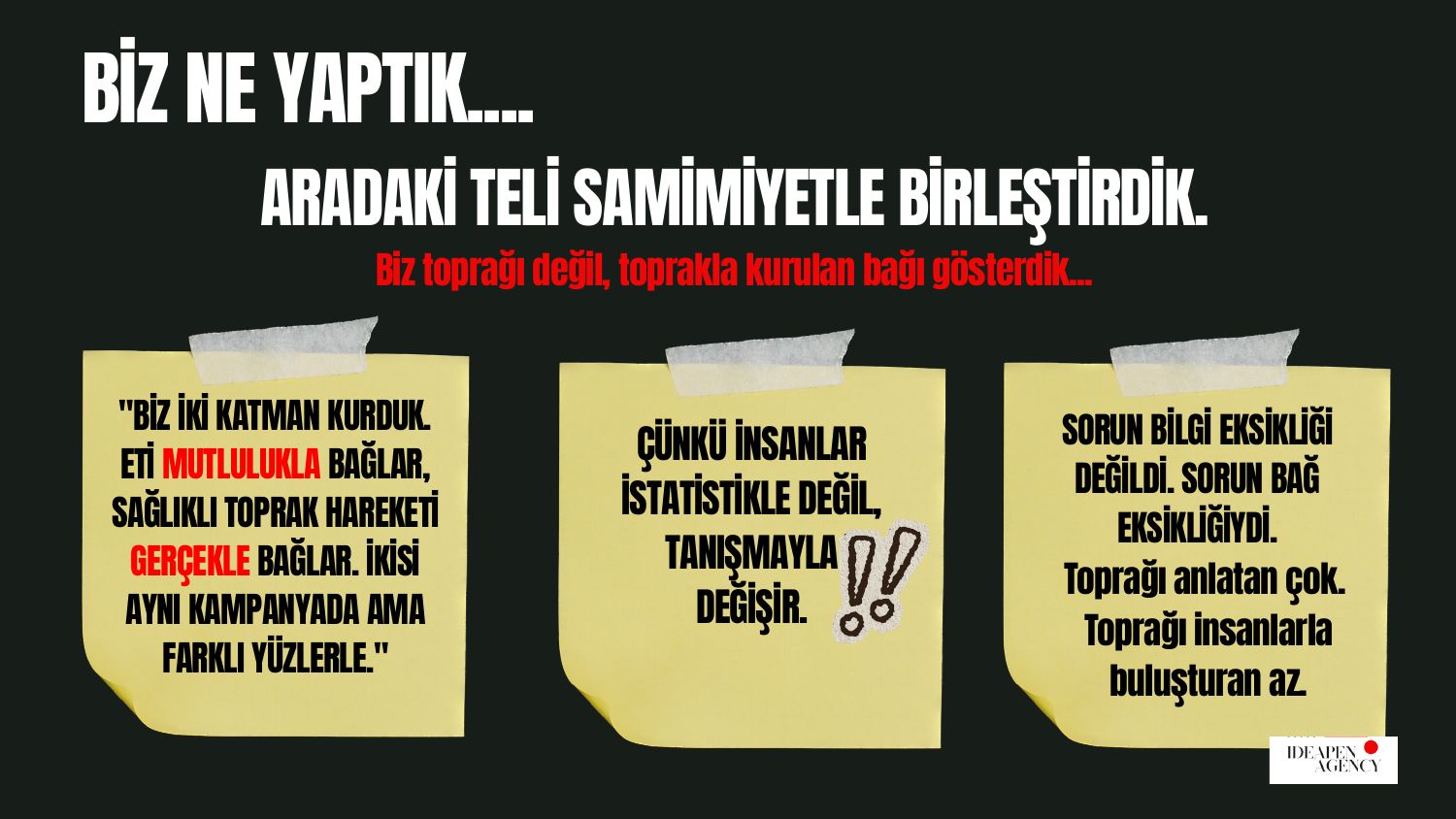
Türkiye’de çiftçi ile tüketici arasında 847 kilometre var ama asıl mesafe coğrafi değil, algısal. İkisi de birbirini görmüyor, aralarında sadece görünmeyen bir tel var. Biz o teli birleştirmek için bir hareket kurduk: Sağlıklı Toprak Hareketi.
▶ icgoru.jpg
▶ problem_metafor_tel.jpg
▶ biz_ne_yaptik.jpg
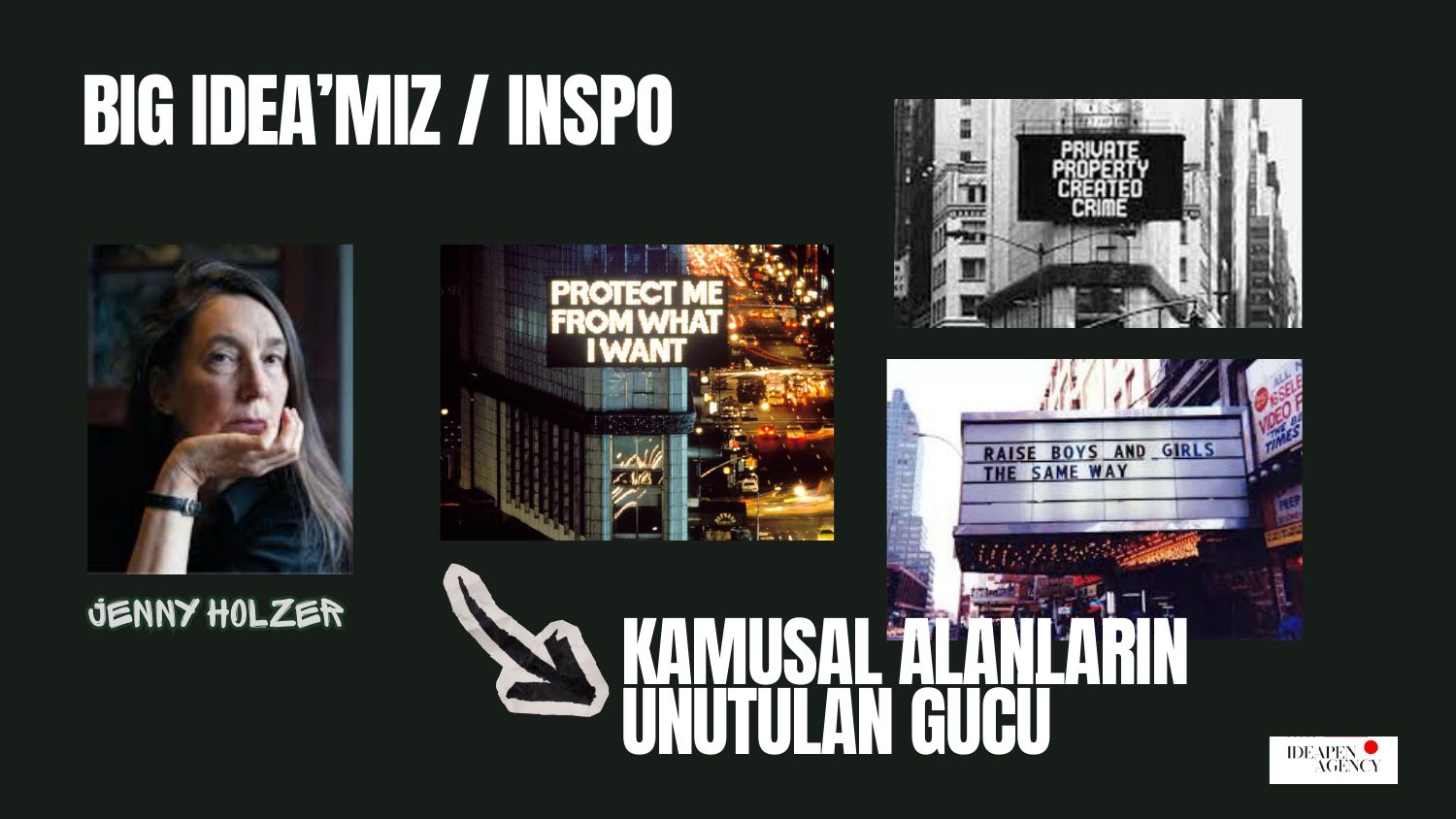
ilham: jenny holzer ve duvar yazıları
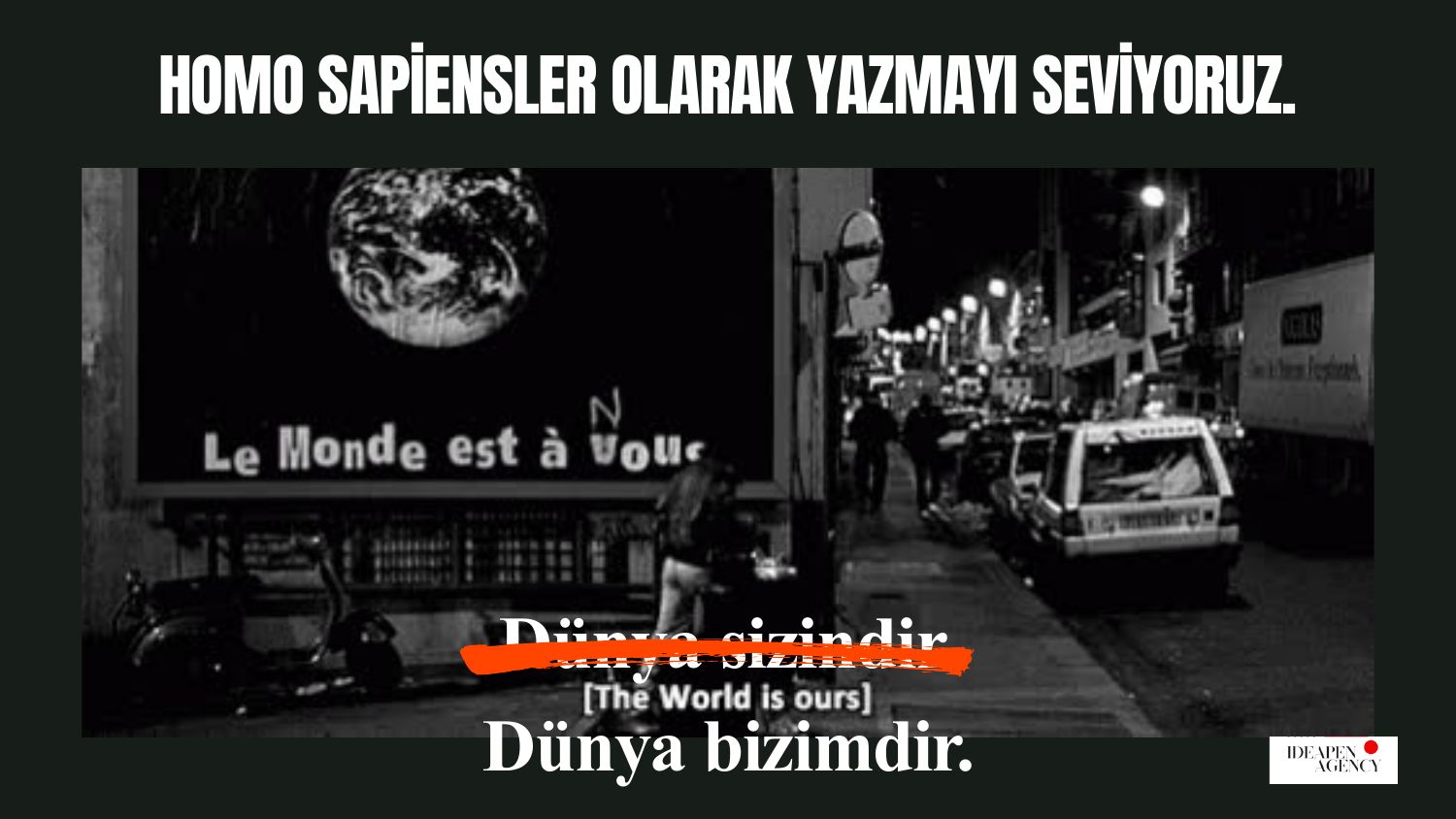
Jenny Holzer’dan ve Türkiye’nin duvar yazılarından ilham aldık: kamusal alanın unutulan gücü. İnsanlar yazmayı seviyor, o yüzden mesajı sokağa, duvara ve kağıda taşıdık.
▶ inspo_jenny_holzer.jpg
▶ dunya_bizimdir.jpg
açıkhava: ilk tanışma
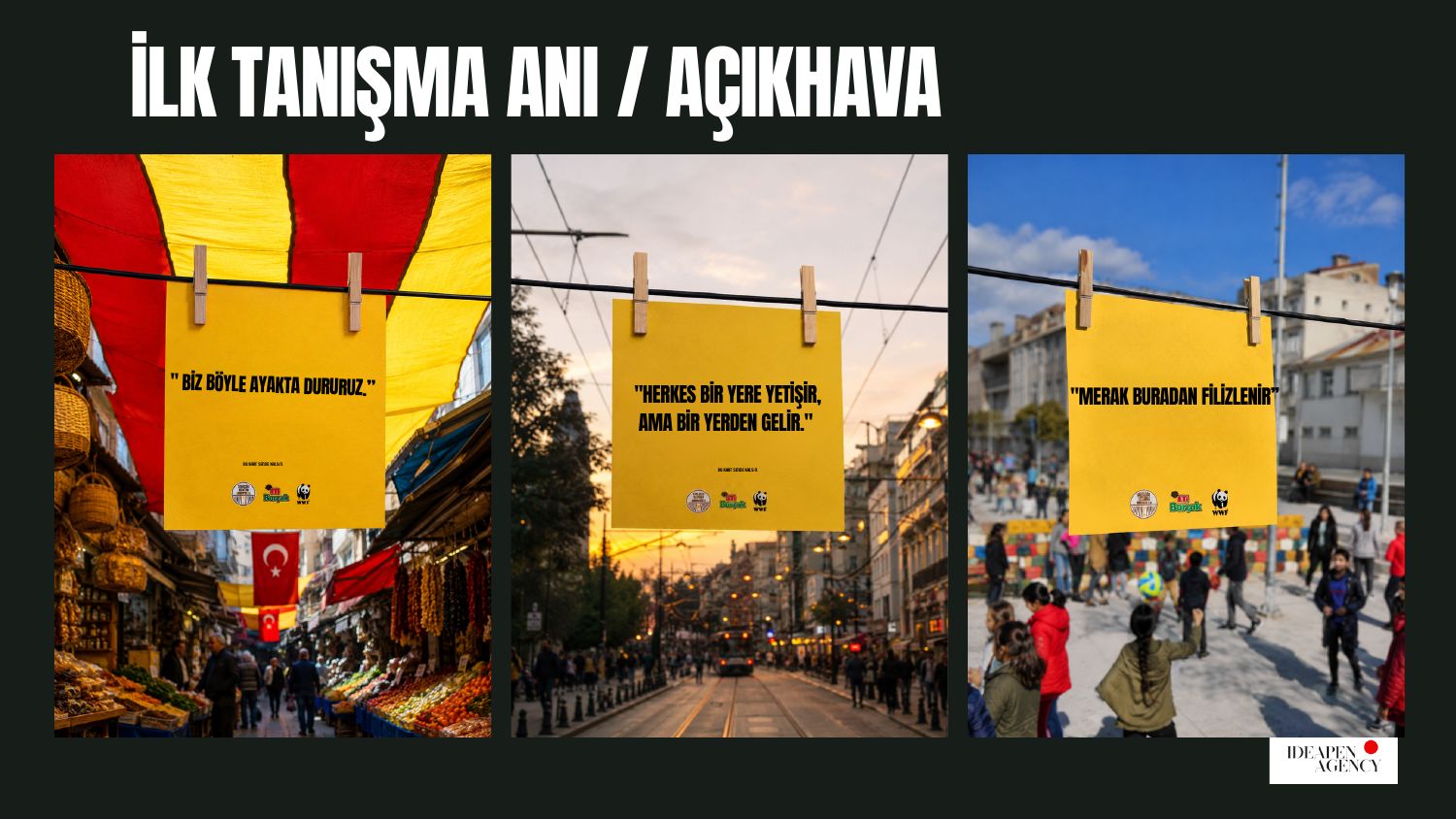
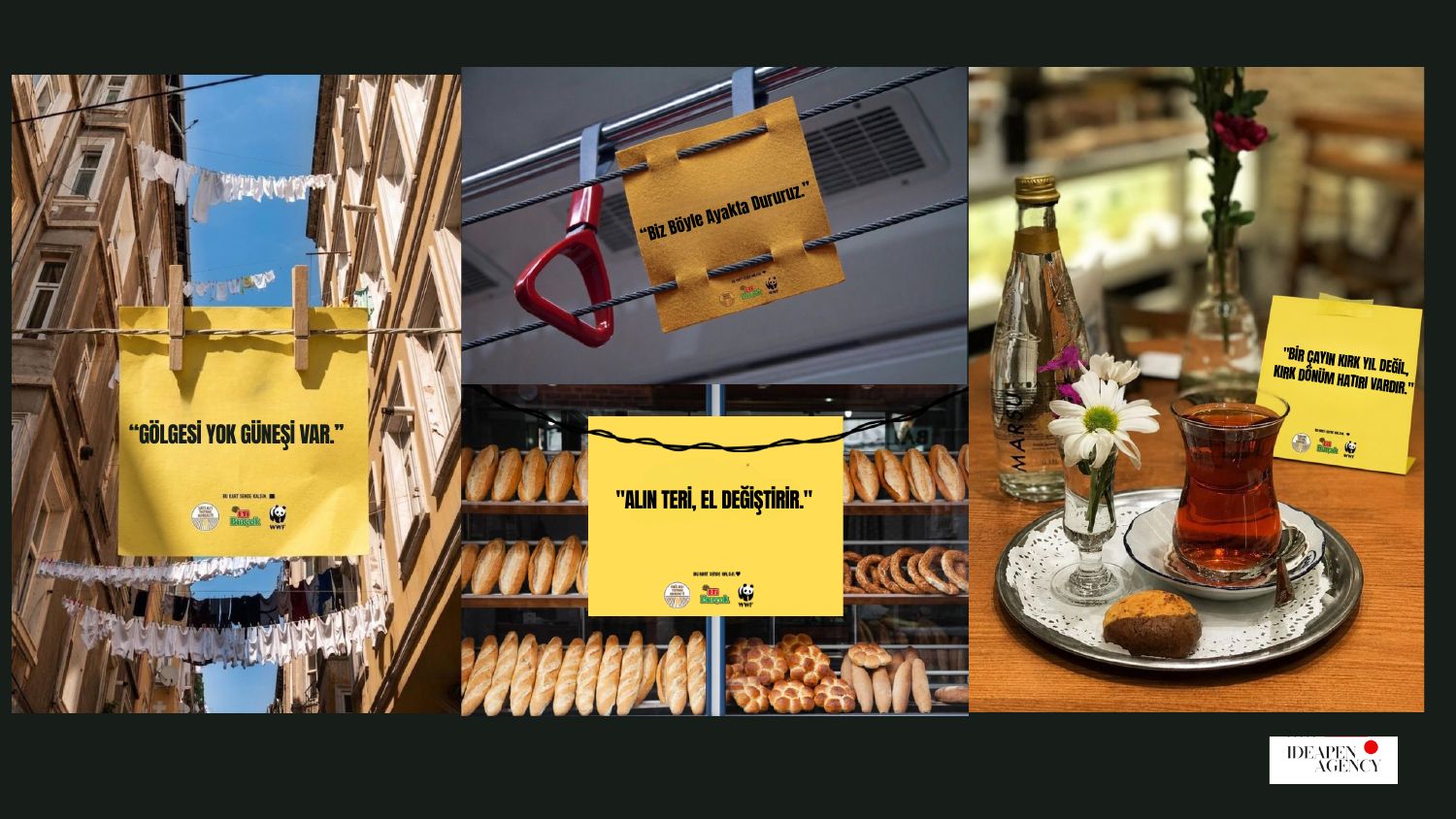
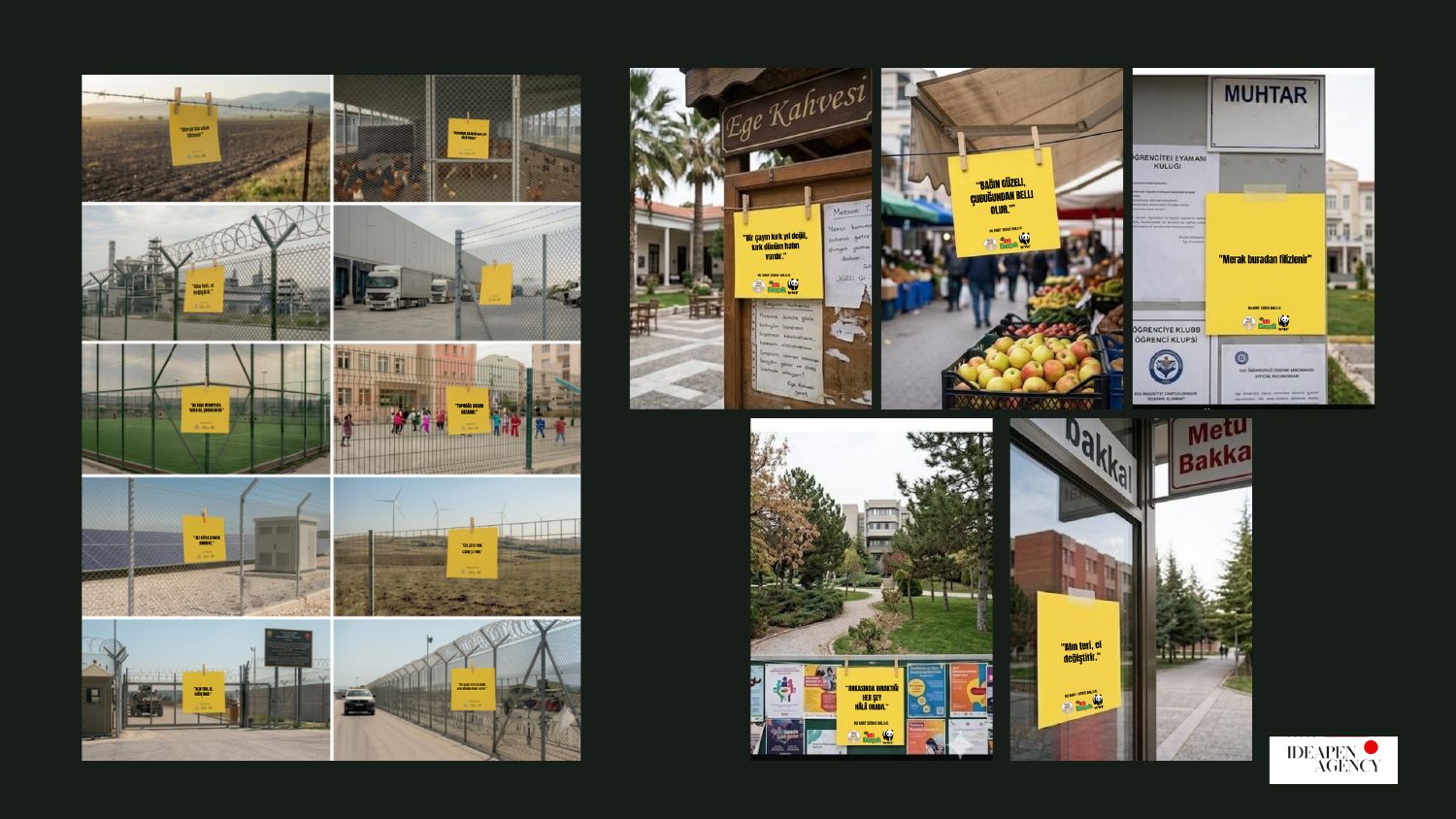
İlk tanışma sokakta: metro, çarşı ve yaya caddelerine sarı kağıtlar asıldı. Mesajlar toprağı değil, toprakla kurulan bağı anlatıyor.
▶ ilk_tanisma.jpg
▶ kahve_simit.jpg
▶ sari_kagitlar.jpg
tv reklamı
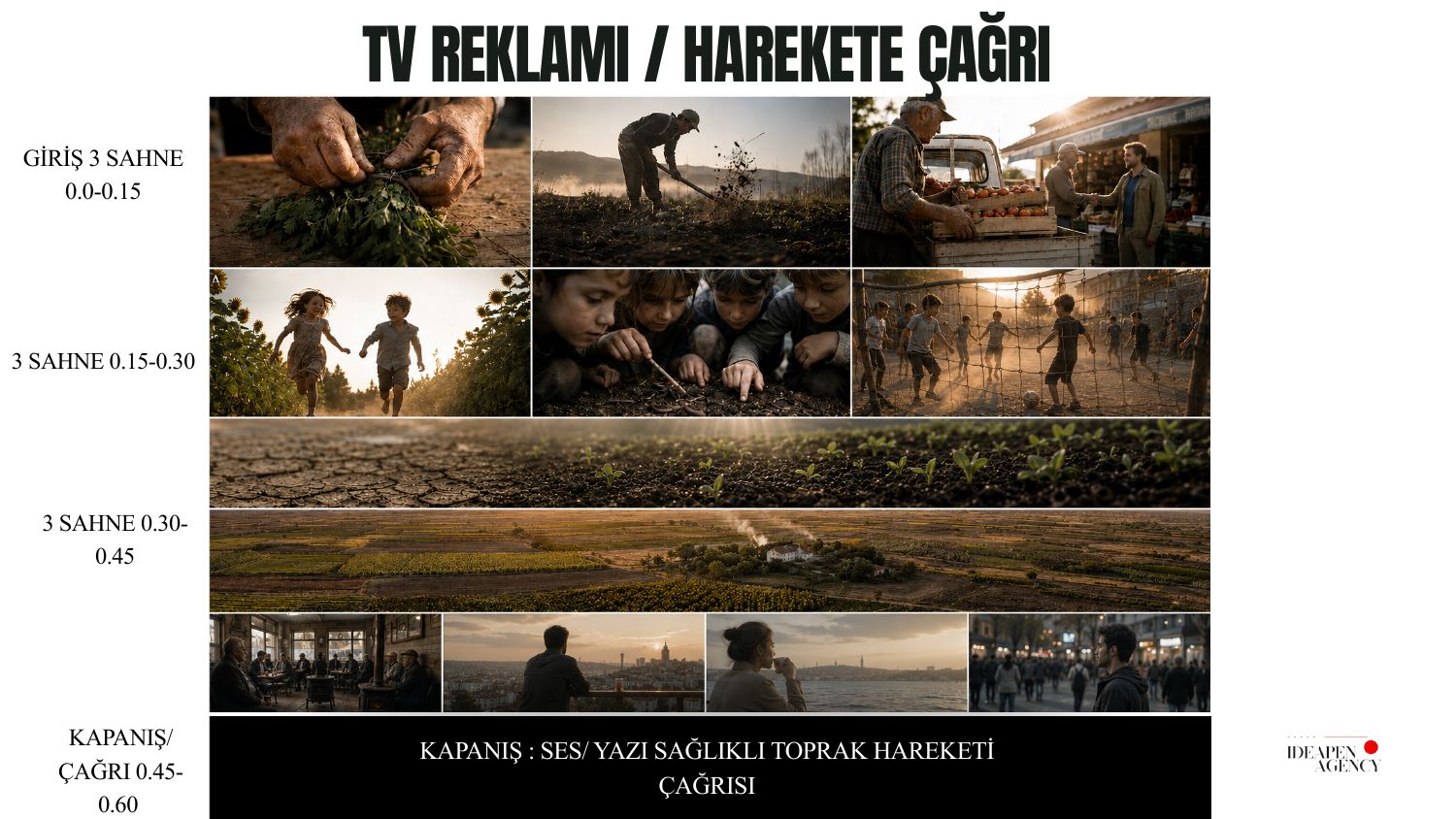
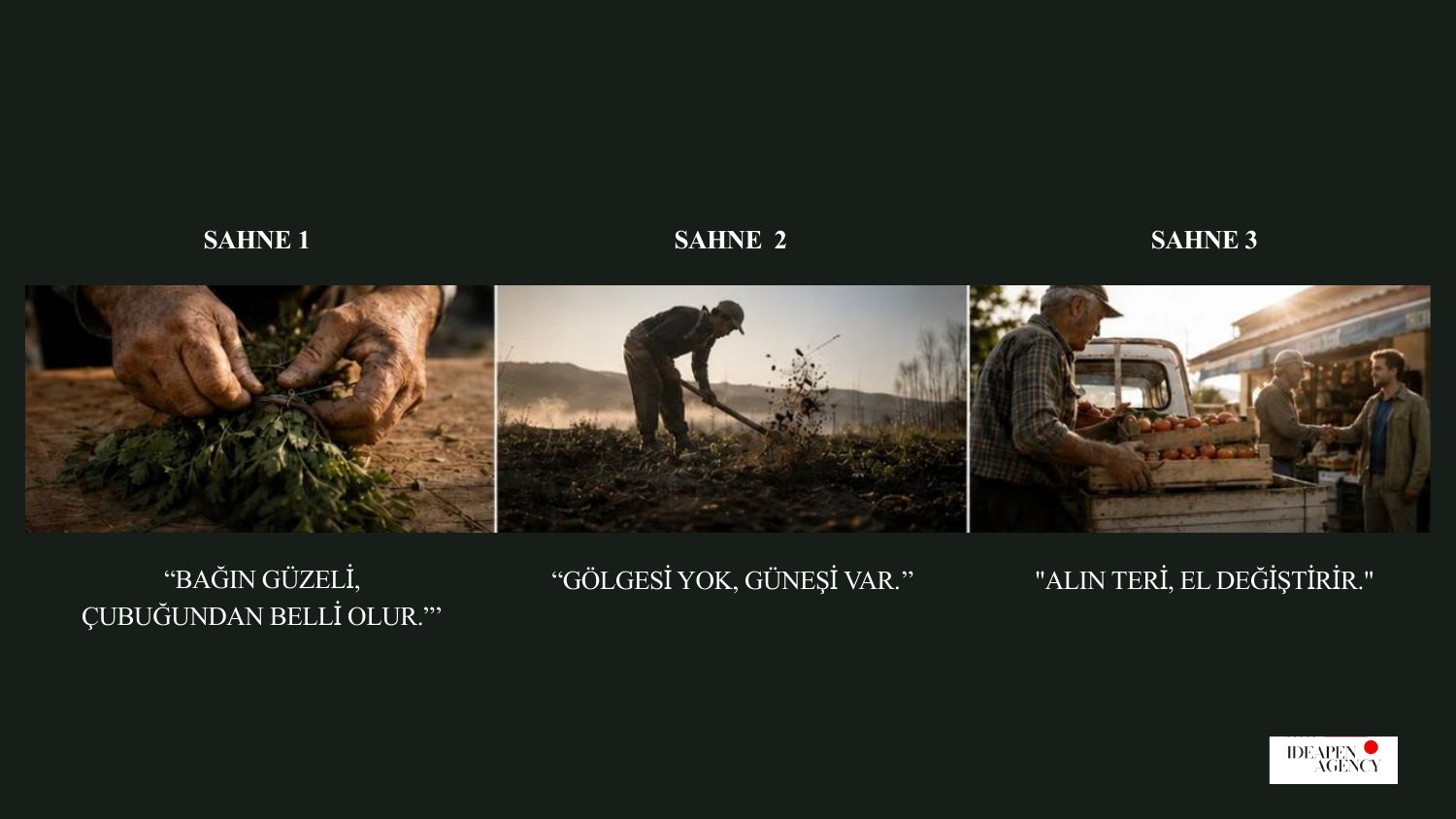
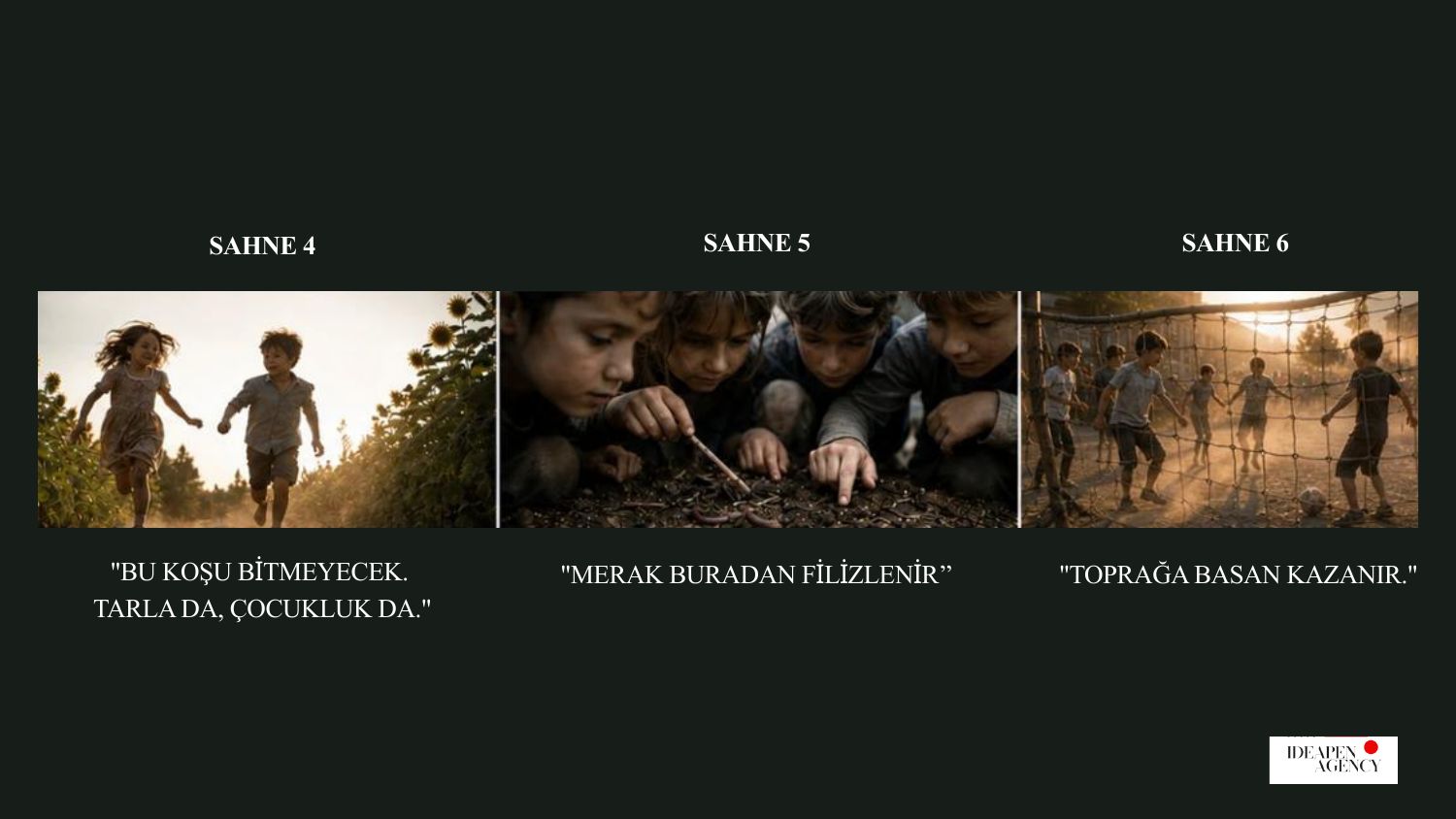
Hareket 12 sahnelik bir TV filmine dönüştü. Kapanışta Şener Şen’in sesi herkesi Sağlıklı Toprak Hareketi’nin bir parçası olmaya davet ediyor.
▶ tv_akis.jpg
▶ sahne_1_3.jpg
▶ sahne_4_6.jpg
buluşma ve dijital
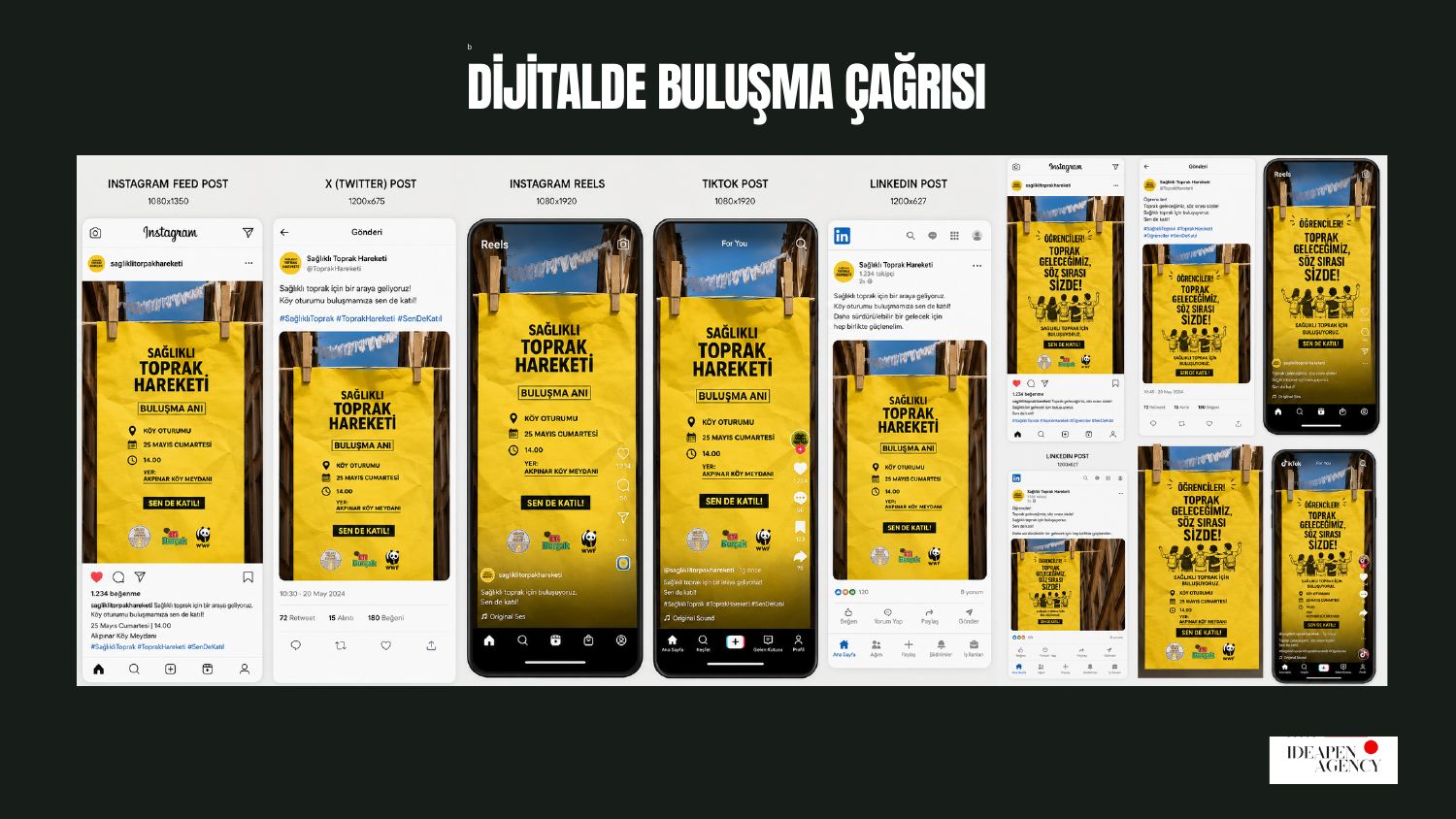
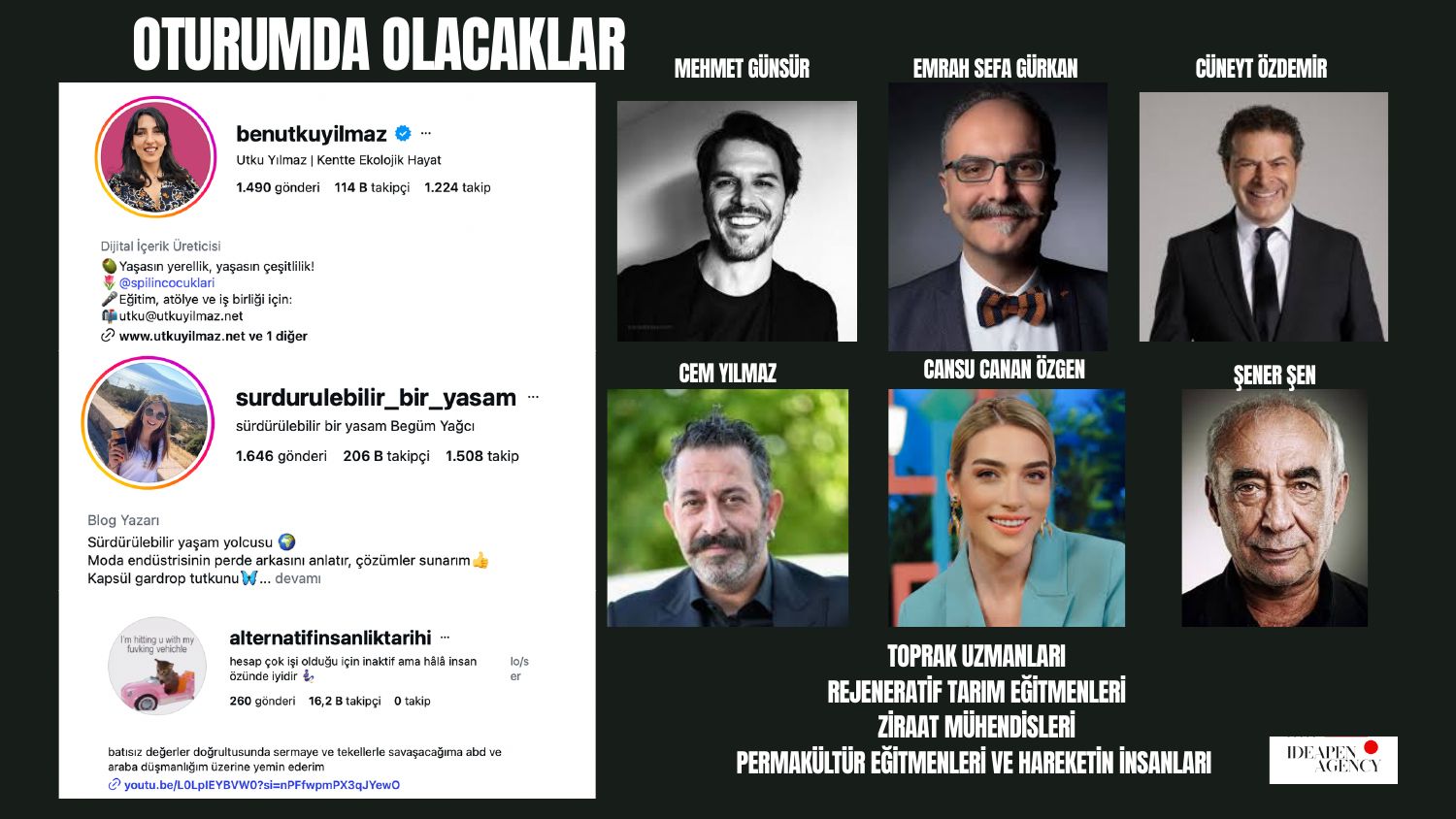
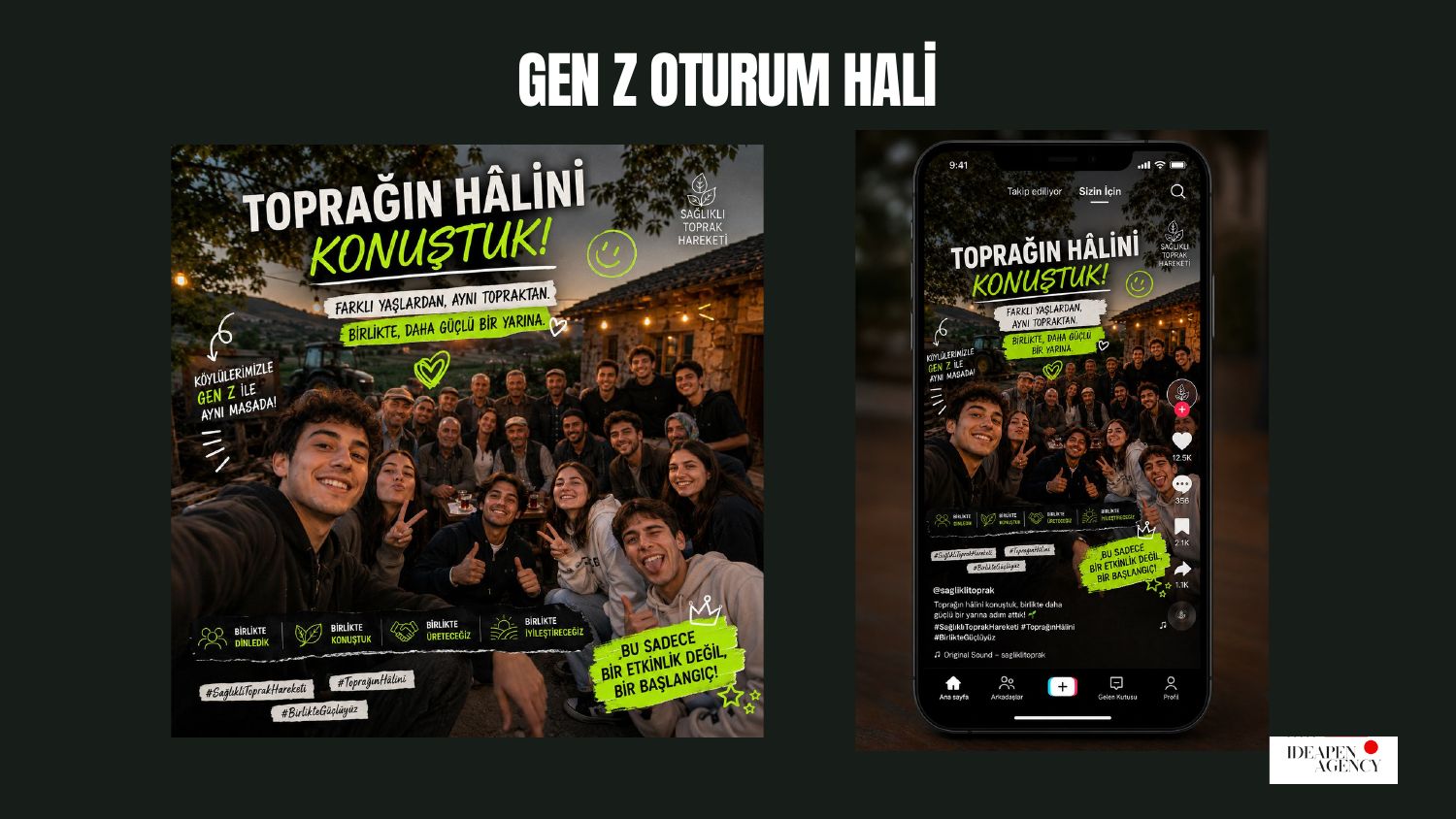
Kağıtlar köyde açık oturumda konuşuluyor, canlı yayınlanıyor ve #TOPRAKHALİMİZ ile dijitale taşınıyor. Etki büyük hesaplarda değil, gerçek seslerde.
▶ dijital_cagri.jpg
▶ oturum_konuklari.jpg
▶ gen_z_oturum.jpg
✧ ETİ × WWF ✧ SÜRDÜRÜLEBİLİRLİK AMA EĞLENCELİ ✧ GERÇEKLİK SAMİMİYETTİR ✧ LEGENDARY ✧
📺
Stajdayken!<3
BREAKING
NTV, Star TV Ankara — Temmuz/Ağustos 2024.
Haber dünyasını sevdiğim için bu alanda stajlar yapmak istedim. Muhabir olmayı deneyimlemek
hayallerimin arasındaydı. Bolca tripod ve kamera taşındı.
▶ ntv_roportaj.mp4
▶ reels_klip.mp4
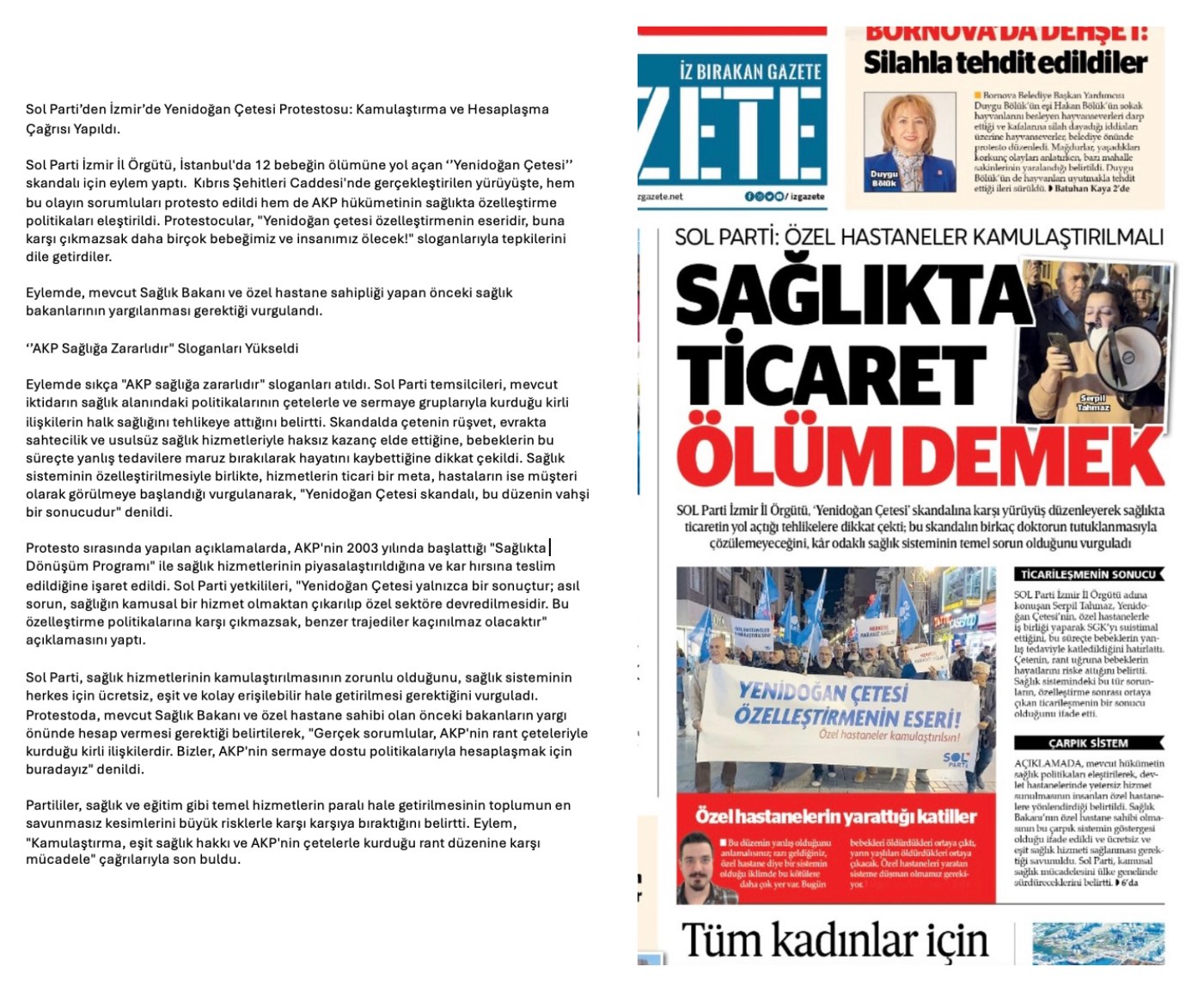
📰
🌐 izgazete.net/haber
✈️
Ulaştırma ve Altyapı Bakanlığı
Basın ve Halkla İlişkiler Stajı, Ankara — 2025
🐦 @UABakanligi
🇹🇷 Türk Hava Sahasında Üst Üste Rekorlar! 🏆
✈️ Rekor gününde her 13,6 saniyede bir uçuş gerçekleşti!
#TürkiyeHızlanıyor 🇹🇷
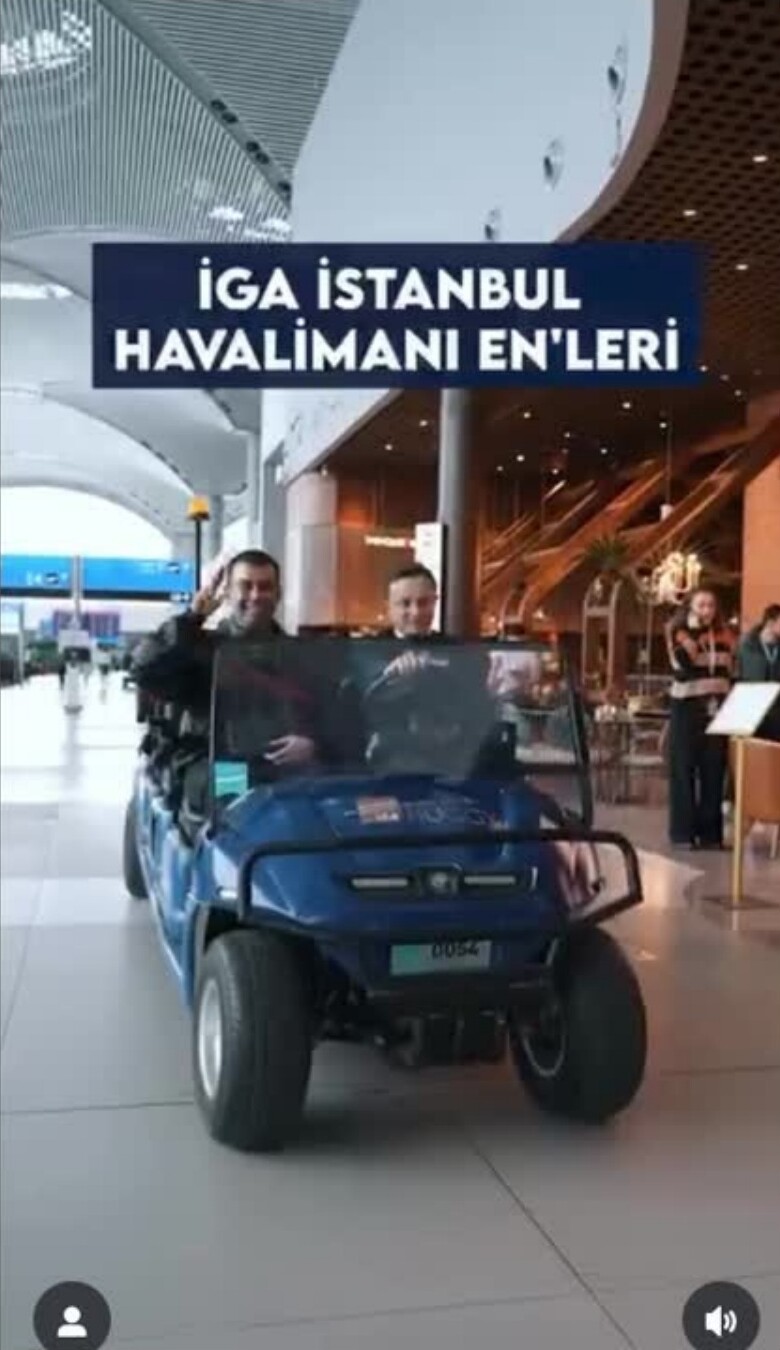
▶ iga_havalimani_enleri.jpg
AMAÇ: Bakanlığın dev projelerini genç kitleye hızlı formatlarla tanıtmak
HEDEF KİTLE: 16–35 yaş, öğrenciler, ulaşım meraklıları
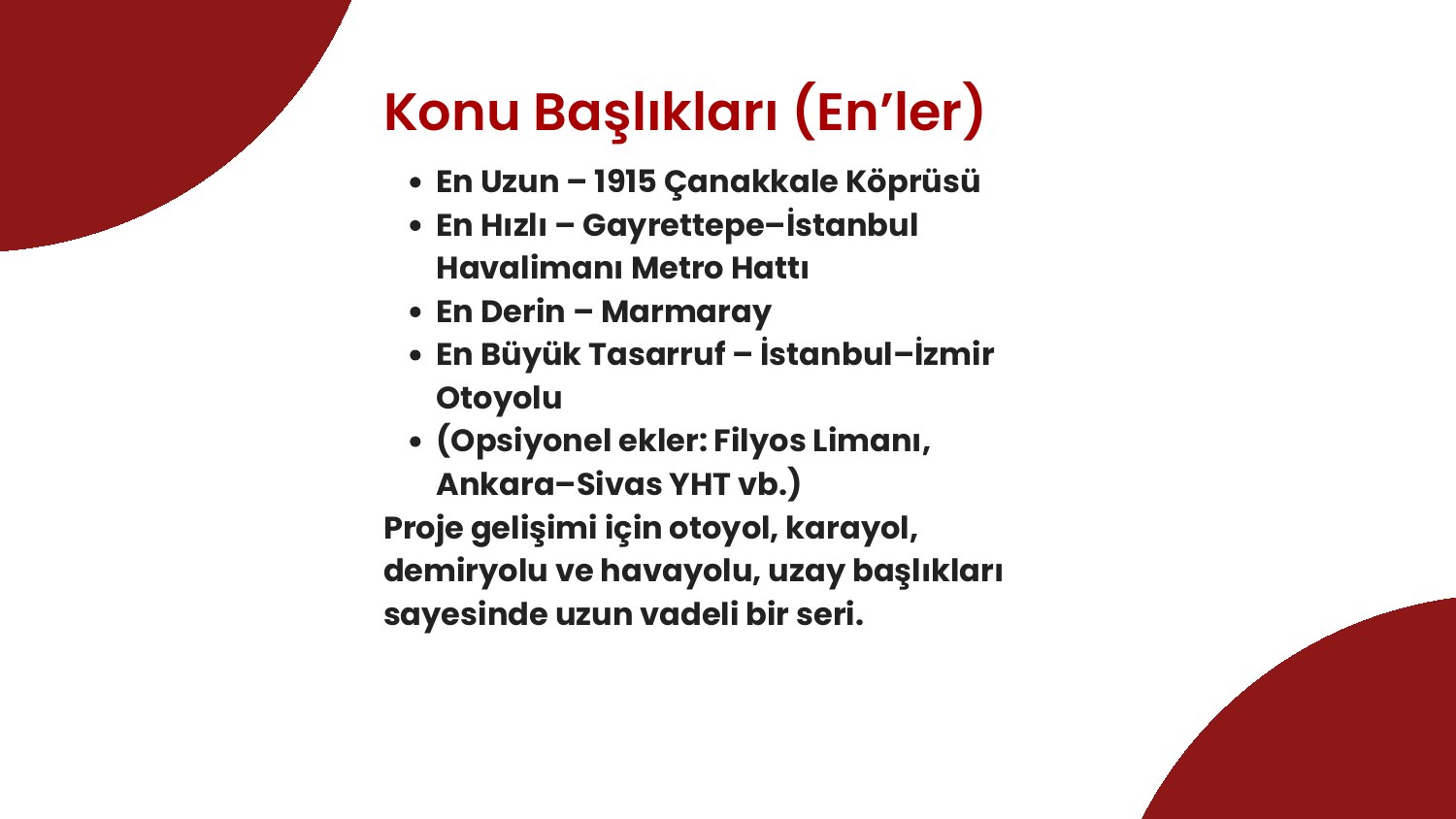
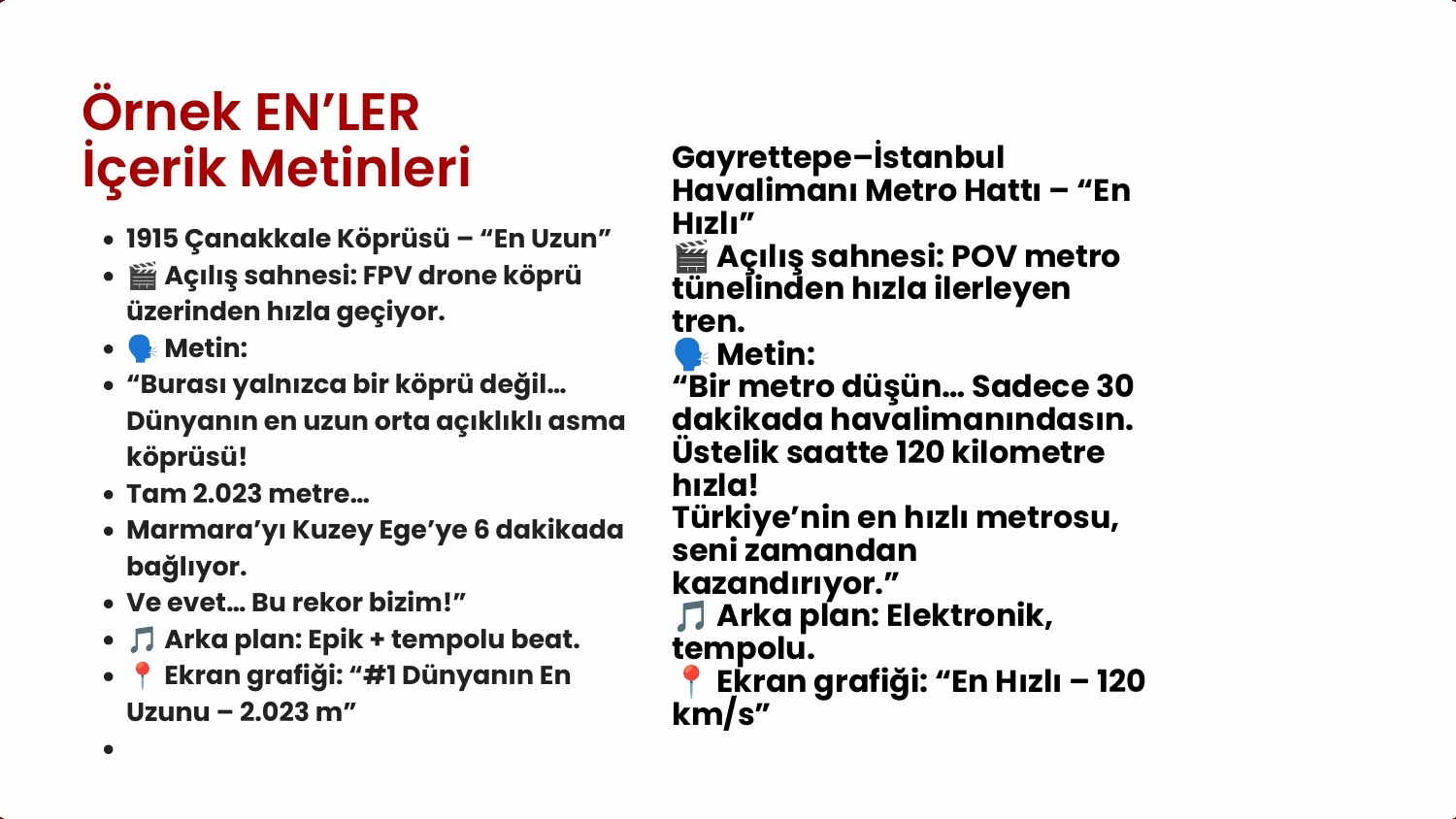
Türkiye’yi Taşıyan Rekorlar: Bakanlığın dev projelerini 60 saniyelik “hap bilgi” videolarıyla anlatan uzun soluklu bir En’ler serisi. En Uzun: 1915 Çanakkale Köprüsü. En Hızlı: Gayrettepe–İstanbul Havalimanı Metro Hattı. En Derin: Marmaray. En Büyük Tasarruf: İstanbul–İzmir Otoyolu.
▶ konu_basliklari.jpg
▶ ornek_icerik_metinleri.jpg
video senaryosu
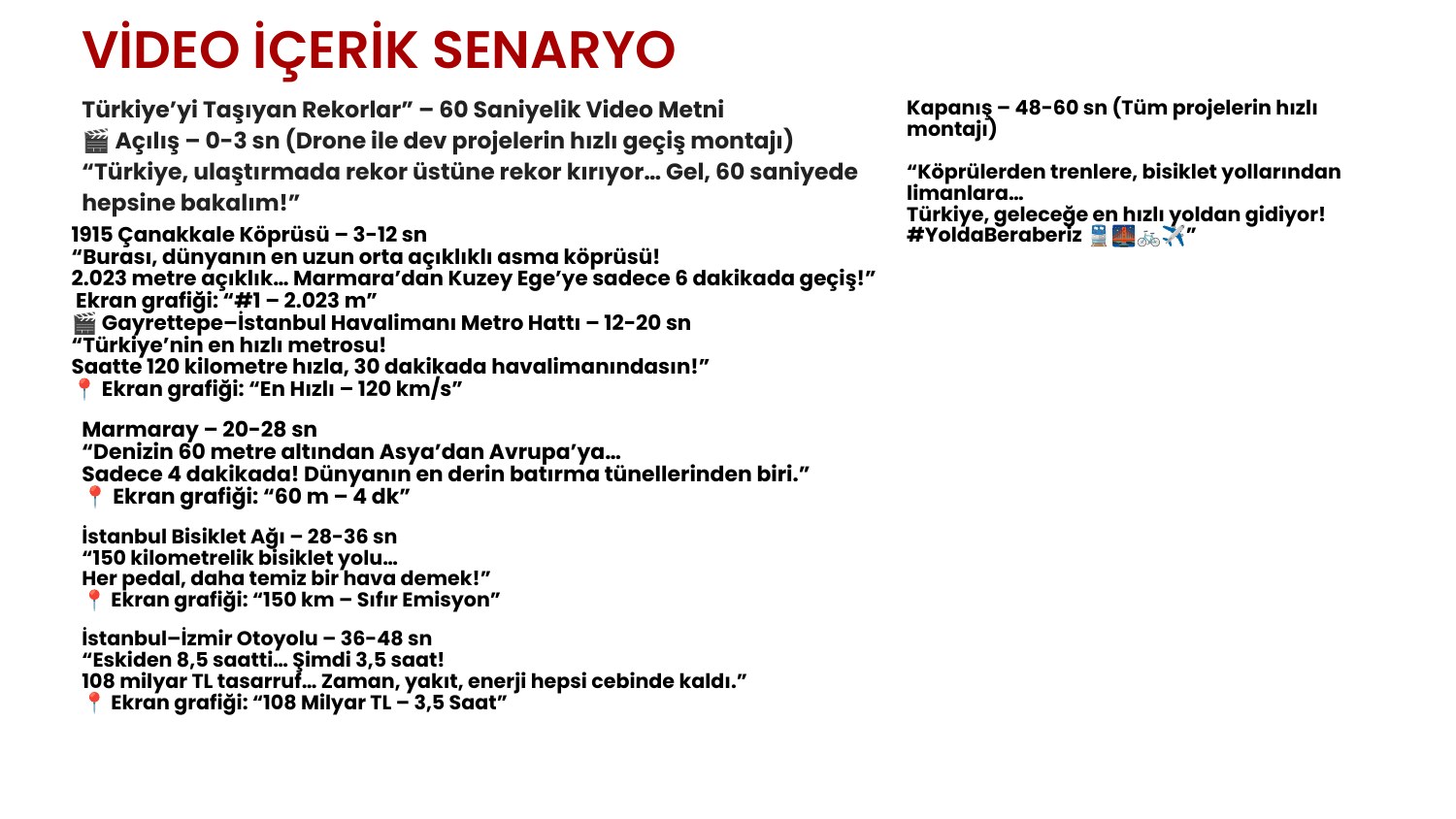
Her bölüm bir rakamla açılıyor: drone ile köprünün üzerinden geçiş, metro tünelinde hızlanan bir POV, denizin altına inen animasyon. Ekranda tek bir grafik, tek bir rekor: “#1 Dünyanın En Uzunu – 2.023 m”.
▶ 60sn_video_senaryo.jpg
Sosyal medya projesi: Duru Beste Saka. Kurgu: Selin Sude Üvez, Berre Aşık.
✧ ULAŞTIRMA VE ALTYAPI BAKANLIĞI ✧ HER 13,6 SANİYEDE BİR UÇUŞ ✧ TÜRKİYE HIZLANIYOR ✧ ANKARA STAJI ✧
🤝TEŞEKKÜRLER
Gönüllülük — KEDV
Kadın Emeğini Değerlendirme Vakfı — Pikan Ajans İzmir, 2023
kaynak geliştirme ekibi ✧
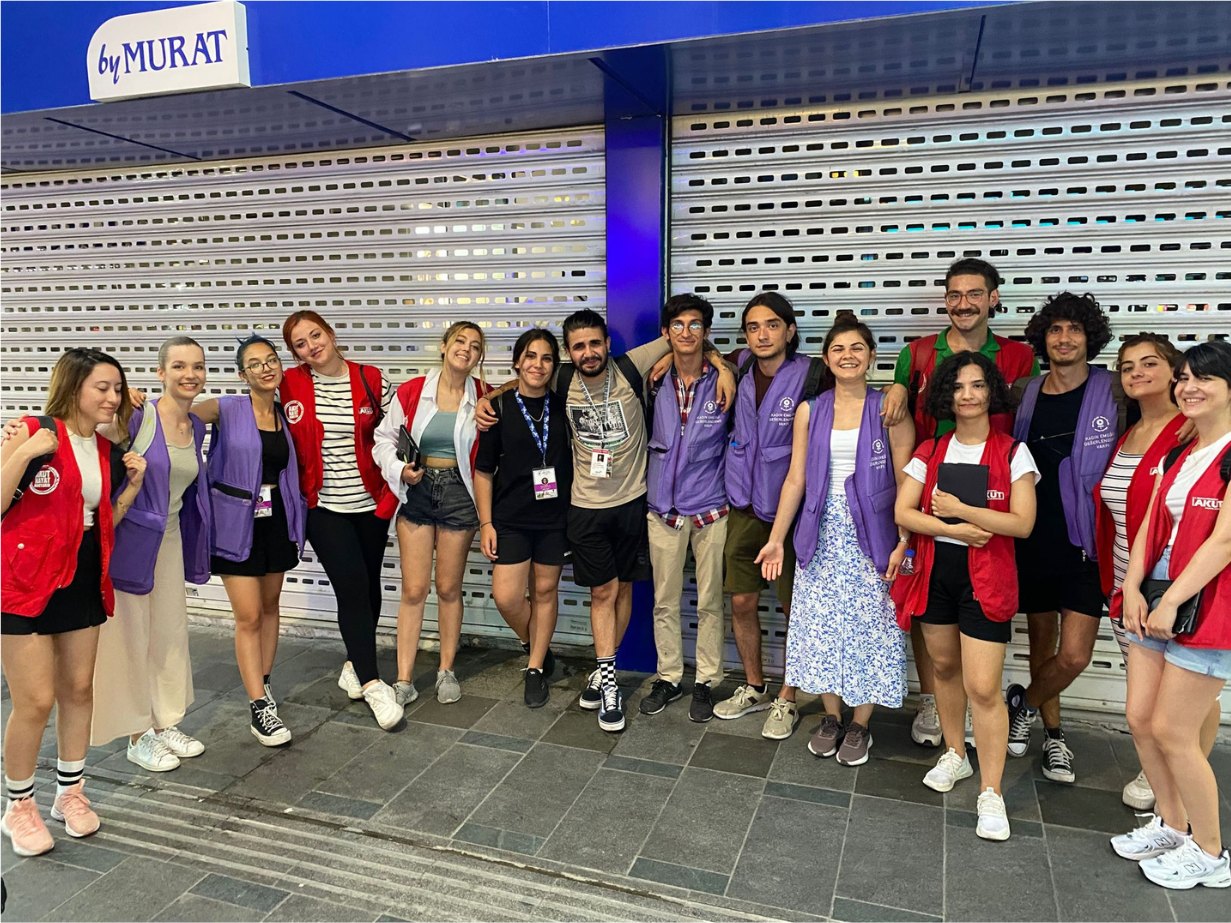
Kaynak geliştirme projesi sayesinde tanıştığım KEDV'in aktif gönüllüsüyüm.
OBSESSED
📸ROLL 01
SMENA SYMBOL 35MM
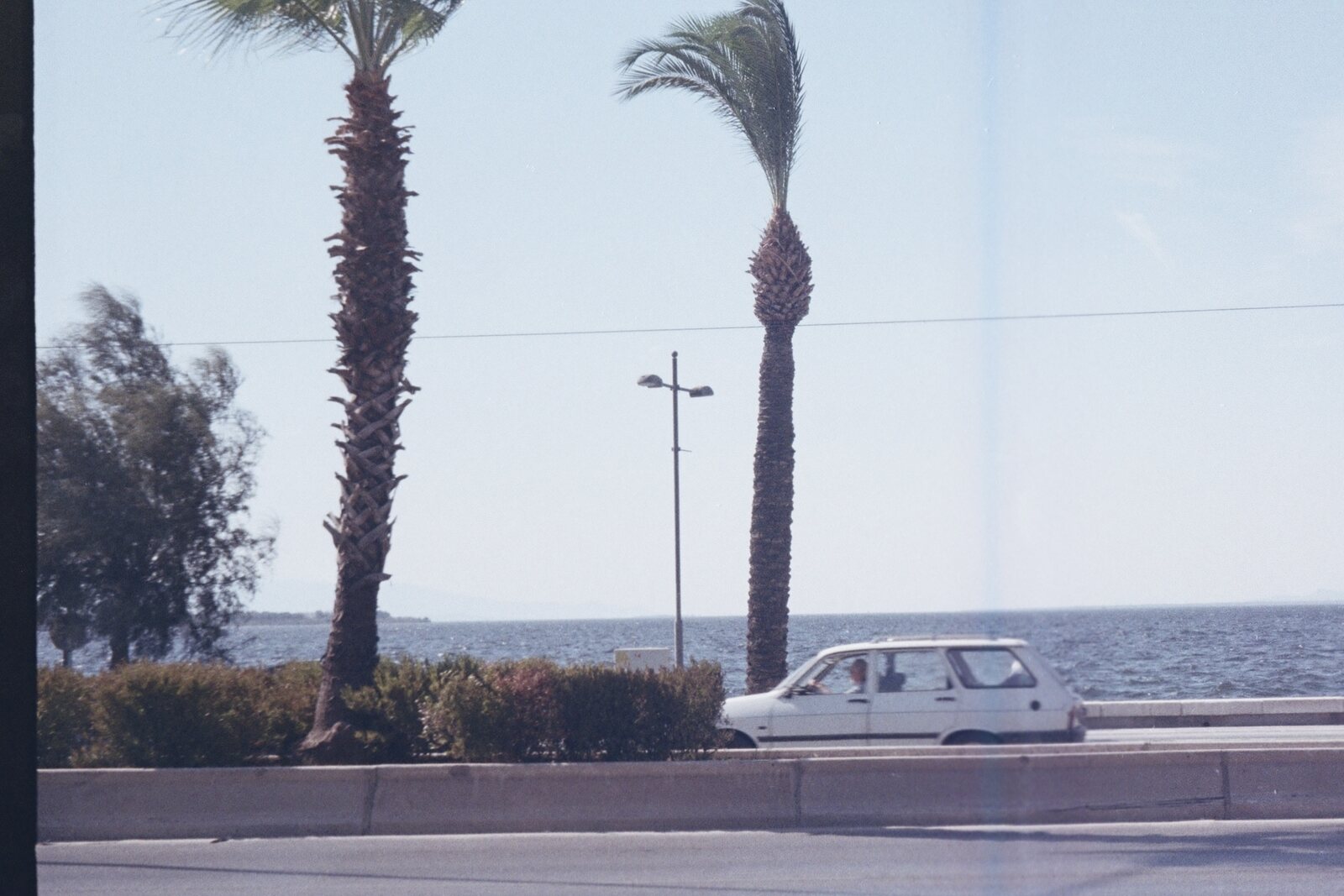
roll_01 — OCT.24 — analog çektiklerim.
roll_01 — kare 01roll_01 — kare 02roll_01 — kare 03roll_01 — kare 04roll_01 — kare 05roll_01 — kare 06
⚠ SAYFA HÂLÂ YAPIM AŞAMASINDA ⚠
404: mükemmeliyet bulunamadı — ve zaten aranmıyordu.
Collecting a big archive here rather than in my brain.
I like to collect creative works.
It’s like trying to understand myself through what I’m drawn to: a lifelong scavenger hunt for meaning. I’ve always loved the esoteric, the raw, the ones that don’t beg to be liked. Sometimes it’s a book, a note, a piece of video art. Sometimes it’s just a line that stays with me longer than I expected.
While reading, I realized I wanted to build my own space: a mass of inspiration collected from people doing deeply human things. This page is about that: inspiration, perspective, and the art that crawls under your skin.
For my first piece, İpek Duben felt like the only right choice, a voice that’s both political and painfully intimate.
İpek Duben
İpek Duben is an installation, painting, sculpture, and video artist whose work moves through the crossroads of politics, sociology, and art. Every piece she makes carries a pulse: sharp, critical, emotional.
Since 1994, she’s been creating artist’s books: raw, experimental pieces that explore identity, domestic violence, and migration. Many expand into installations woven with sound, light, and moving image.
There’s something magnetic about how Duben uses form as protest, turning silence, fabric, and even walking into acts of resistance.
ŞERİFE #6-7-8, 1981
Who is Şerife? “… a house cleaner from an Anatolian village, abandoned by her husband, migrated to İstanbul for her son’s education.”
I love Şerife because it’s not just a painting, it’s a quiet kind of revolution.
In Duben’s hands, Şerife becomes a symbol of unseen labor: women who clean, feed, and hold up the world while being erased from it. The soft pink dresses in the painting breathe without bodies; they carry exhaustion, care, and survival. Every fold feels like a memory. Every seam, a prayer.
Women like Şerife, doing domestic work, are rarely called by their names, just “the woman.” Duben refuses that anonymity.
She once said, “Her absence was her signature; the dress was a metaphor for the average lower-class Turkish woman and came to represent all women denied their rightful place in society.”
Şerife isn’t about presence, it’s about absence, about how even emptiness can scream when painted truthfully.
Follow the Arrow
Site specific installation, Tünel/Beyoğlu, Istanbul. 347 painted metal arrows lead pedestrians to art venues in Tünel and Asmalımescit neighborhood. Every yellow arrow points to movement, migration, and the quiet politics of public space.
Follow the Arrow turns a walk through Beyoğlu into something more than movement: an awakening. Duben’s yellow arrows guide us through streets and cafés, tracing the invisible routes of women, workers, and outsiders. Each arrow is both a question and a direction, a quiet reminder that even walking can be political.
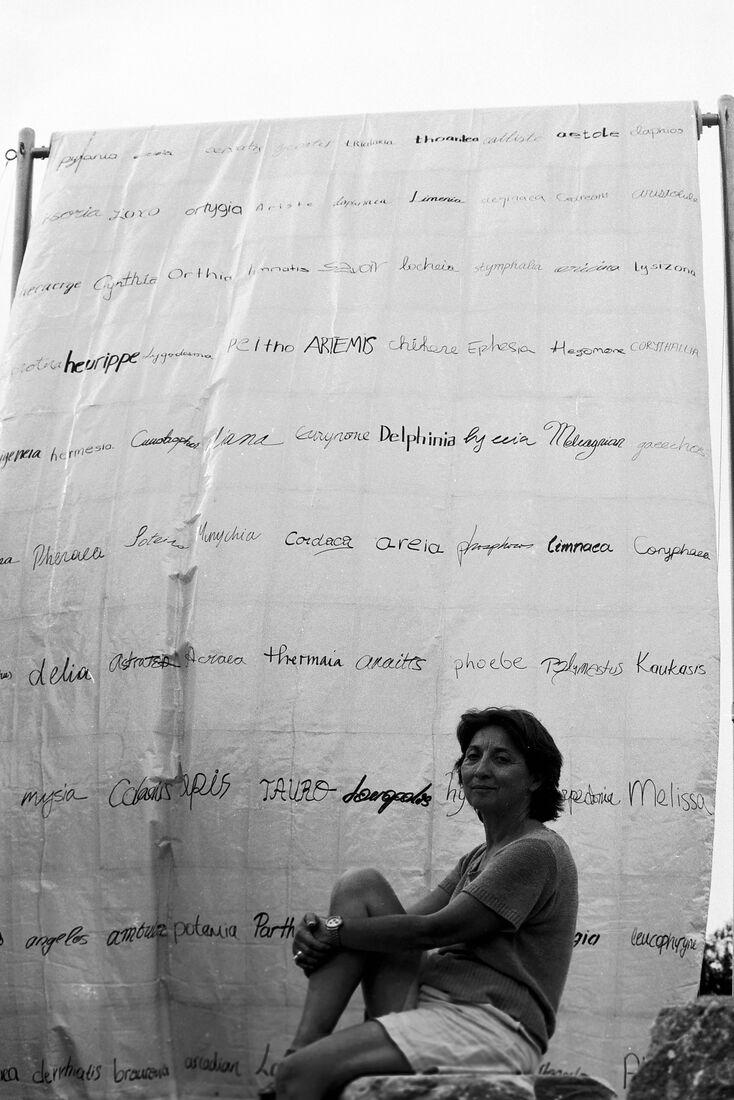
Artemis II, Ephesus: The Imagination of History, Ephesus, 1995
Artemis, Ephesus, 1995
In Manuscript 1994, Duben begins with her own photographs, layering them with mixed materials, offset printing, and digital interventions to question what identity really means.
A year later, she reimagines one of these images in Artemis (I.n, 1995), created in Ephesus for the Imaginary History exhibition. Through it, she reflects on how women have always been framed: both worshipped as goddesses and sacrificed as victims. The duality is timeless, brutal, and still alive today.
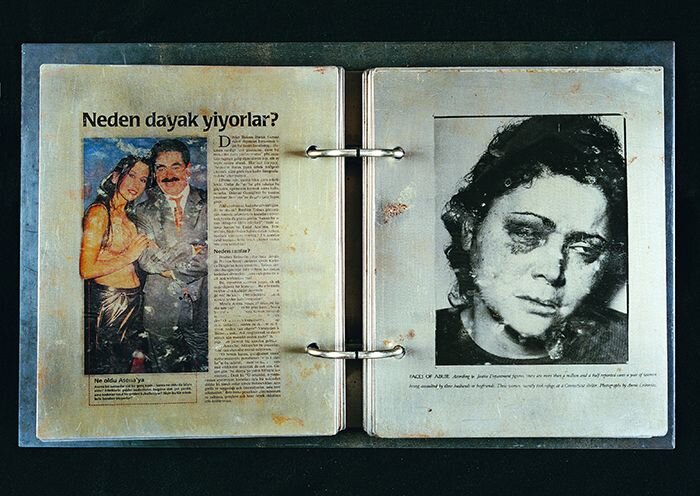
LoveBook (detail)
LoveBook, detail
LoveBook hits like a bruise that never fully heals.
Here, Duben collages tabloid headlines, bruised faces, and fragments of women’s stories; the kind of images we’re trained to look away from. “Why are they beaten?” one page asks. But the question isn’t seeking an answer, it’s holding a mirror.
Duben doesn’t document violence; she indicts the culture that normalizes it. The glossy magazine photo beside the battered face says it all: how easily glamour and pain coexist in the same visual frame.
LoveBook isn’t about victims. It’s about the systems that keep producing them and the silence that follows.
İpek Duben makes art that doesn’t let you stay comfortable. Her work lives at the fault line between beauty and brutality, where fabric becomes testimony and walking becomes a protest. She’s not making art to decorate; she’s making art to witness.
And that’s why I love her, because she reminds me that empathy too can be a political act.